
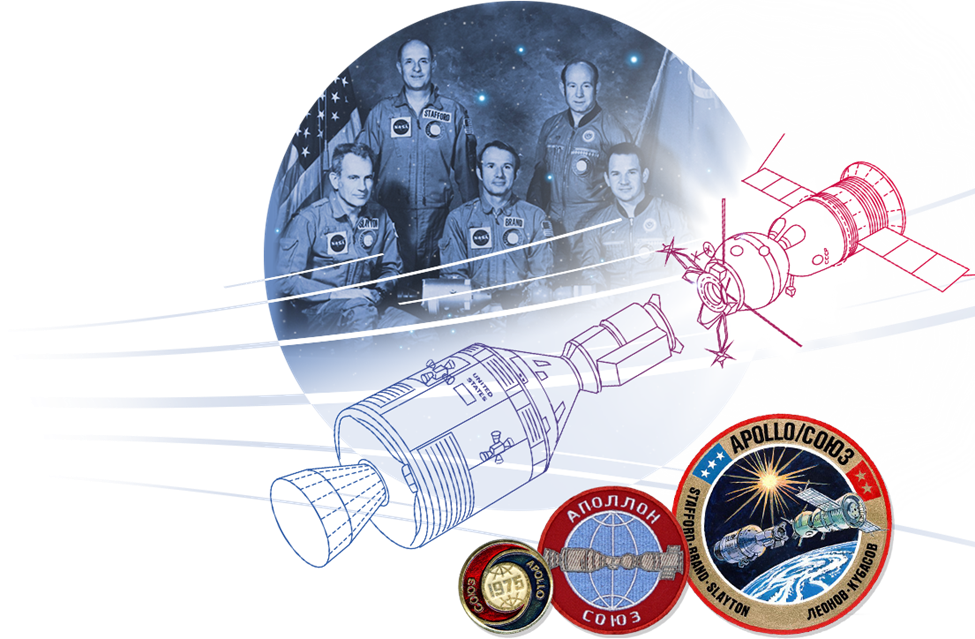
The website for the Russian State Space Corporation ROSCOSMOS published a treasure trove of unclassified documents, 36 in all, covering hundreds of pages to celebrate the 17 July 1975 Apollo-Soyuz mission. In the run-up to the 50th anniversary of the second celebrated Soviet-American handshake over the Elbe River, we’ll be publishing as many interesting reports as we can get translated. In the meantime, we’re presenting excerpts from the ‘Apollo-Soyuz Test Project Mission Report’ hosted on the website.
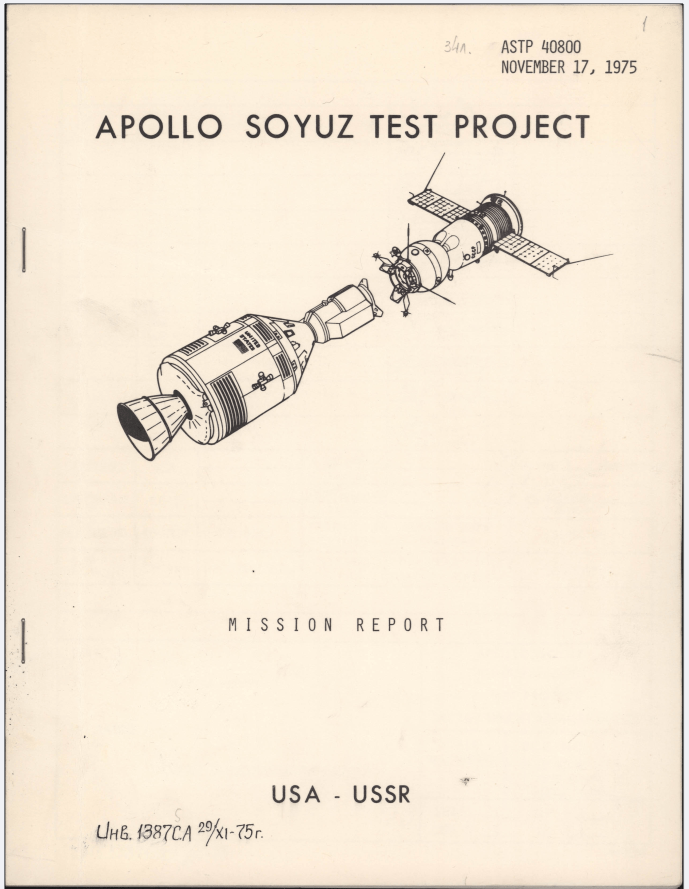
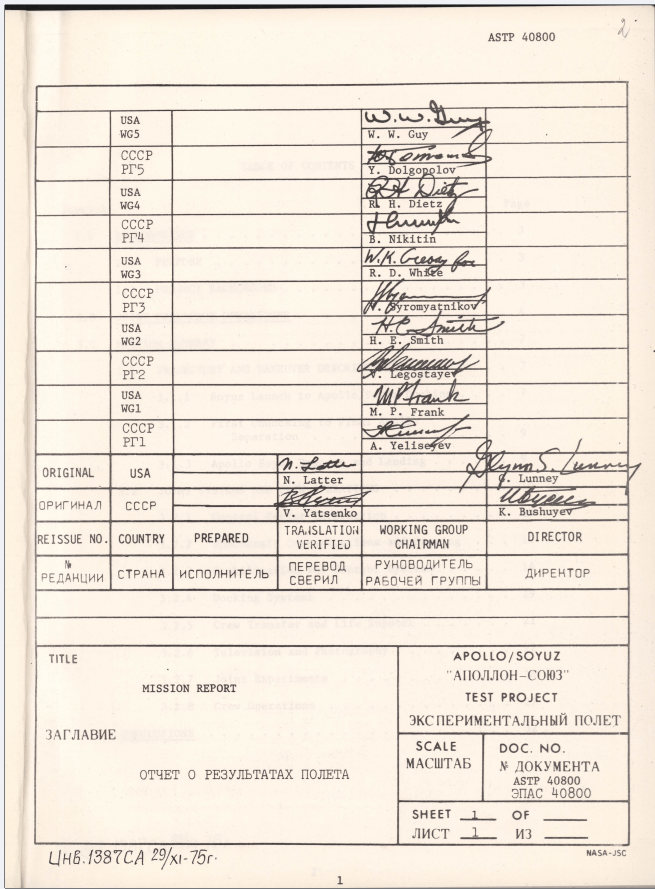
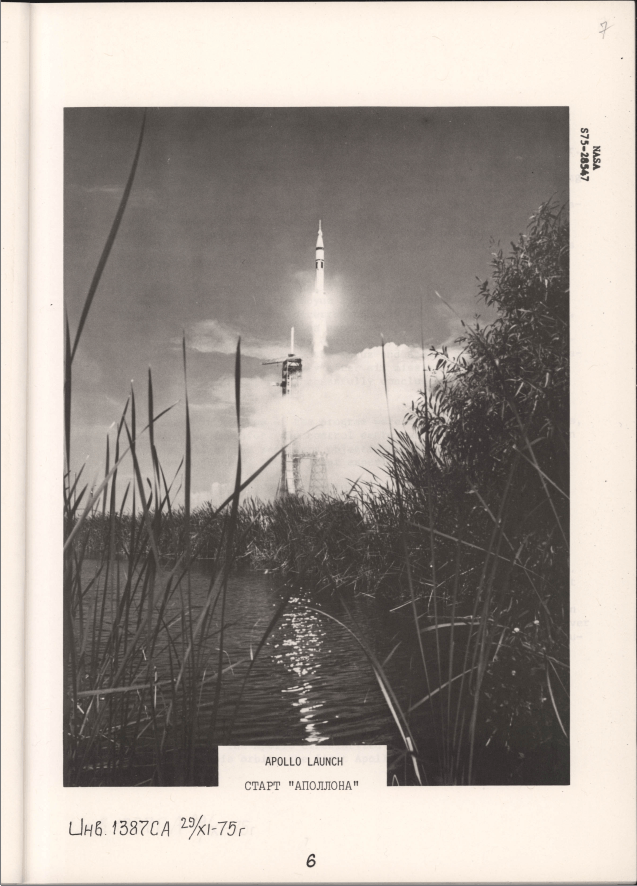
The unclassified document was published on 17 November 1975 as Report ASTP 40800. It is a dual-language (English and Russian) photographic diary of the events in space. The version published to the Russian website is woefully slimmer than the original – 9 pages instead of 49 – but this is a nice glimpse at some of the players, along with names and signatures of members of the American and Soviet working groups.
Also included below are a few other pictures and diagrams from the website. Enjoy!
Translated from the ROSCOSMOS website:
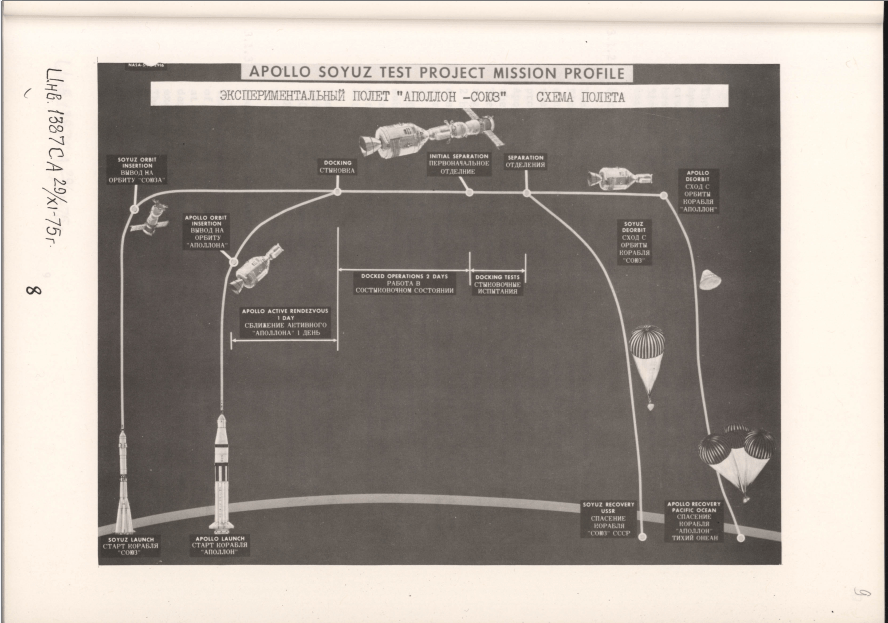
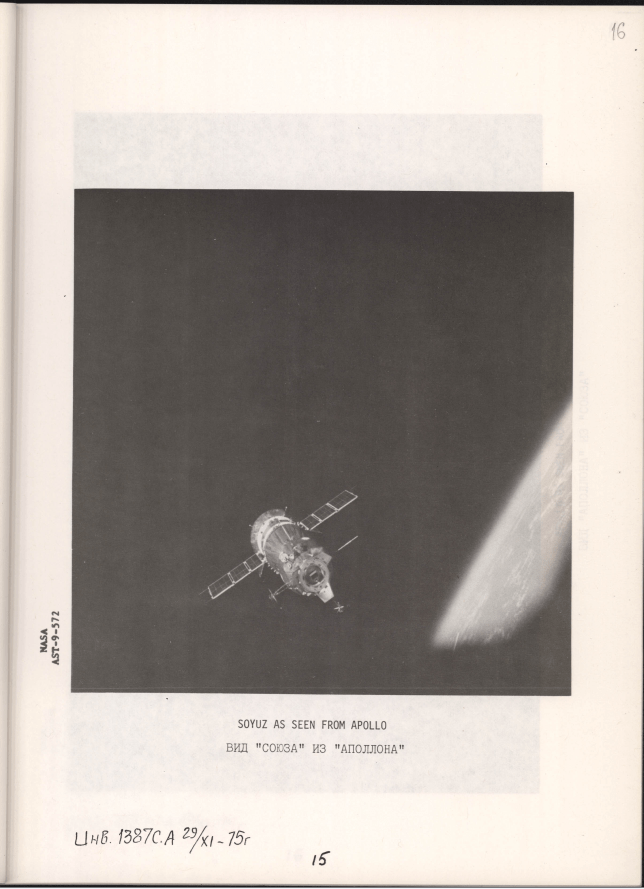
On July 15, 1975, within a few hours of each other, manned spacecraft – the Soviet Soyuz-19 and the American Apollo – took off into the sky to conduct an experiment in docking and creating the first-ever unified international orbital complex.
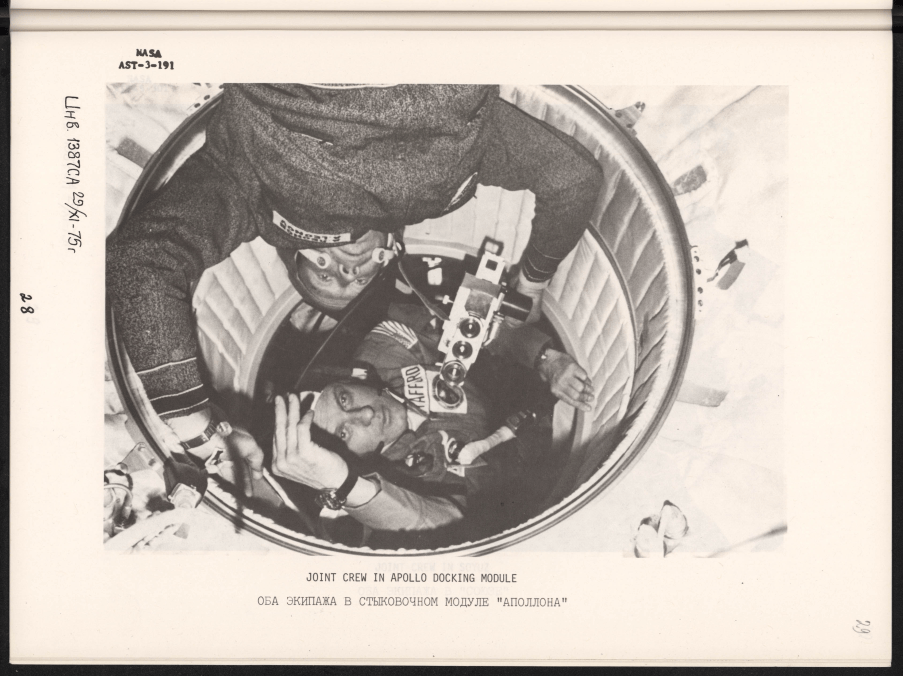
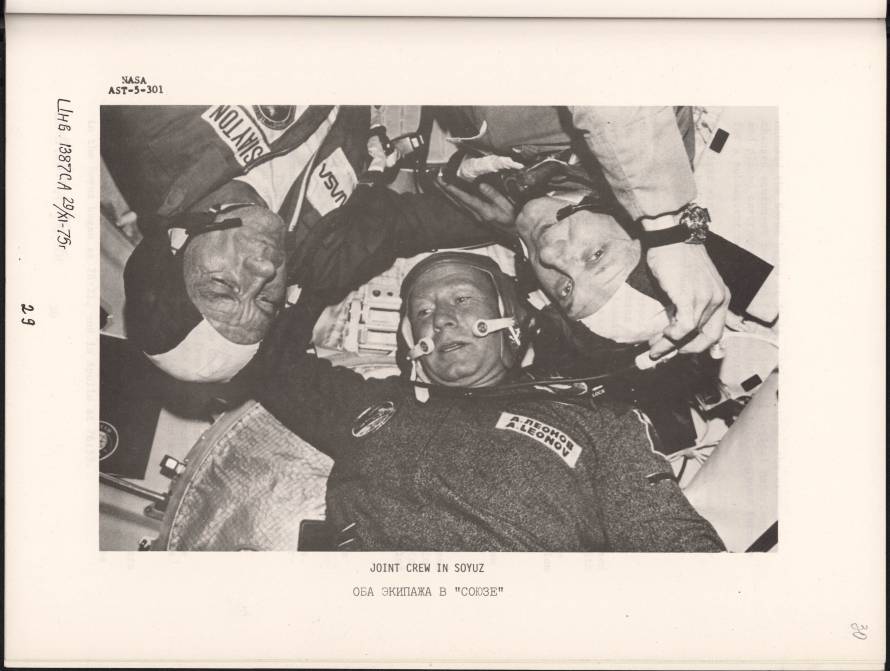
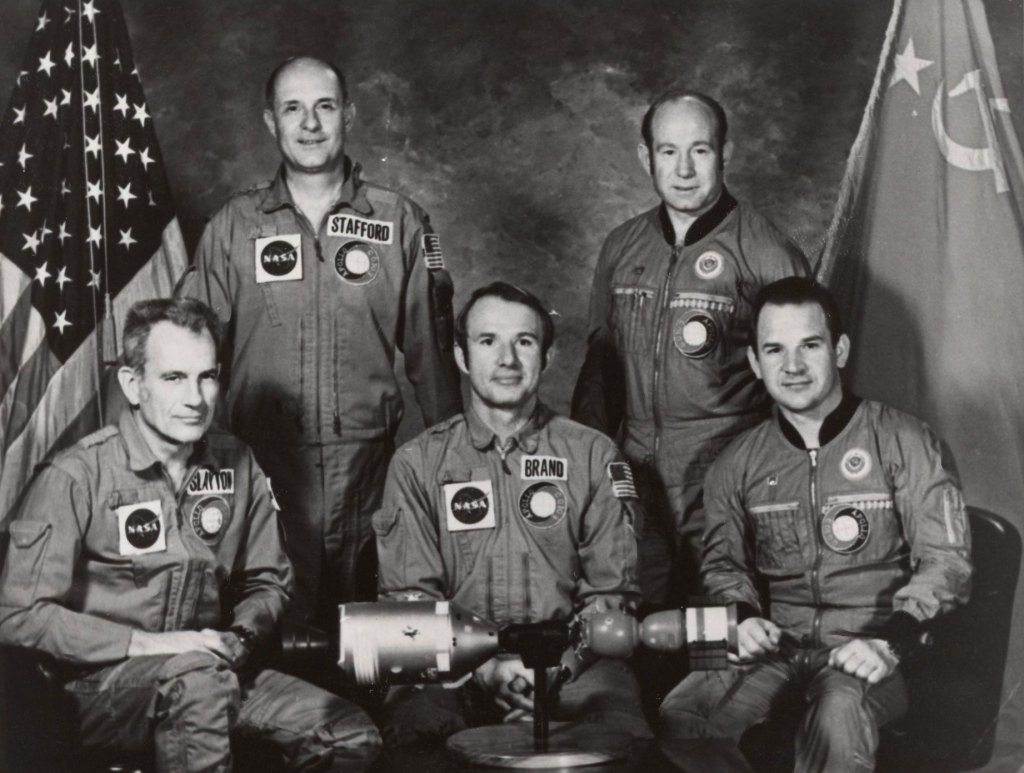
Two days later, Soviet cosmonauts Alexei Leonov and Valeri Kubasov met American astronauts Thomas Stafford, Vance Brand, and Donald Slayton in the docking module. The docking took place when the ships were flying over Moscow, and the cosmonauts shook hands over the Elbe, which was very symbolic, given that it took place in the year of the 30th anniversary of the Great Victory.
The idea of international cooperation in space was first expressed by the founder of theoretical cosmonautics, Konstantin Eduardovich Tsiolkovsky, in the science fiction story “Beyond the Earth,” published in 1920.
After the end of World War II, when the world plunged into the abyss of the Cold War, it would seem that international cooperation in space could be forgotten. However, the first Chief Designer of Soviet rocket and space technology, Sergei Pavlovich Korolev, wrote in his article published on November 10, 1960 in the newspaper Pravda: “There is no doubt that the time is not far off when powerful spaceships weighing many tens of tons, equipped with all kinds of scientific equipment, with a large crew, will leave the Earth and, like the ancient Argonauts, set off on a long journey… We can hope that in this noble, gigantic undertaking, international cooperation of scientists imbued with the desire to work for the benefit of all mankind, in the name of peace and progress, will increasingly expand.”
Understanding the common goals and the need for cooperation in space exploration forced scientists from the USSR and the USA to overcome their Cold War fears even during the escalation of the Cuban Missile Crisis. The first agreement on cooperation in the peaceful exploration of space was signed by the USSR Academy of Sciences (AS) and the US National Aeronautics and Space Administration (NASA) on June 8, 1962. However, these intentions were not put into practice until the 1970s. On January 21, 1971, the President of the USSR Academy of Sciences, Academician Mstislav Vsevolodovich Keldysh, and the Acting NASA Administrator, Dr. George Michael Low, signed a document on joint activities in space physics, space meteorology, environmental studies, space biology, and medicine. The first consultations on conducting an experiment on docking Soviet and American manned spacecraft in orbit also date back to that time.
The basis for the start of work on the joint flight program was the “Agreement on Cooperation in the Exploration and Use of Outer Space for Peaceful Purposes,” signed on May 24, 1972 in Moscow by the Chairman of the Council of Ministers of the USSR Alexei Kosygin and the President of the United States Richard Nixon. It fully corresponded to the spirit of détente, two days before the signing of another historic document – the Strategic Arms Limitation Treaty (SALT-1).
In less than three years, Soviet industry created, tested, and tried out in orbit a special modification of the Soyuz with an androgynous peripheral docking unit compatible with a similar device installed on the American Apollo. To launch the modified ship, a new unified rocket 11A511U (later called Soyuz-U) was developed, differing from the previously used 11A511 carrier (Soyuz) in its improved energy characteristics of the first and second stage engines. A Flight Control Center (FCC) was deployed to Podlipki (now the city of Korolev), capable of working in the complex chain of organizing the ASTP and receiving delegations of foreign specialists and representatives of the press. It was thanks to this work that the ASTP experiment ended in complete success. As a milestone in the easing of international tensions, the Apollo-Soyuz docking gave a powerful impetus to the development of international cooperation in space exploration and development. This project can be considered a starting point not only for the International Space Station project, but also for future deep space expeditions, which are conceivable only in the context of active international cooperation, pooling resources, intelligence, and the daring determination of pioneers in the common interest.



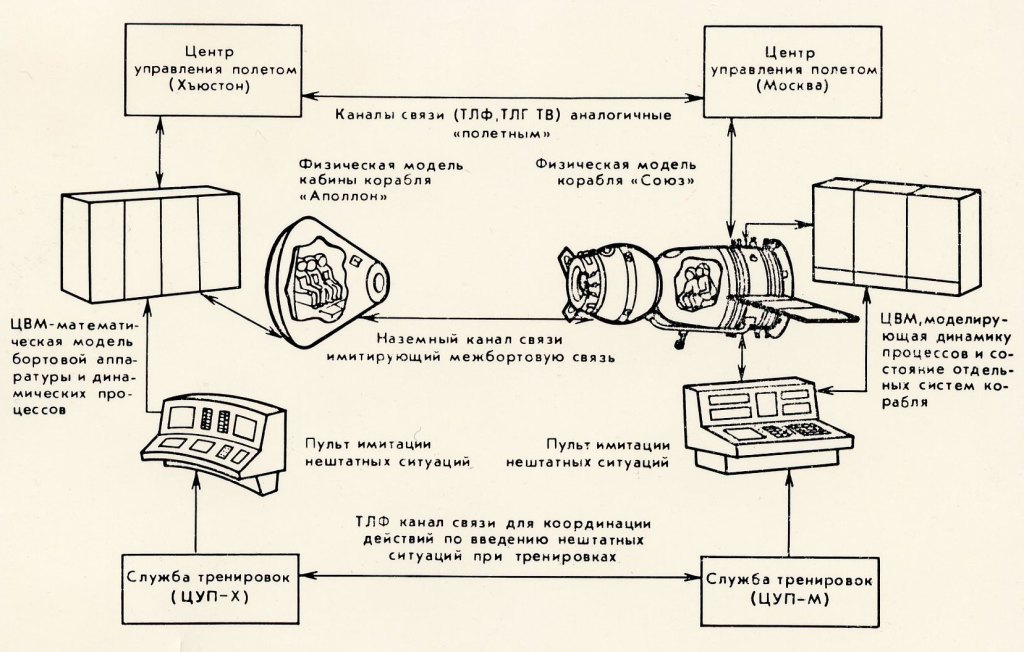
Flight modeling during control center training (in Russian):
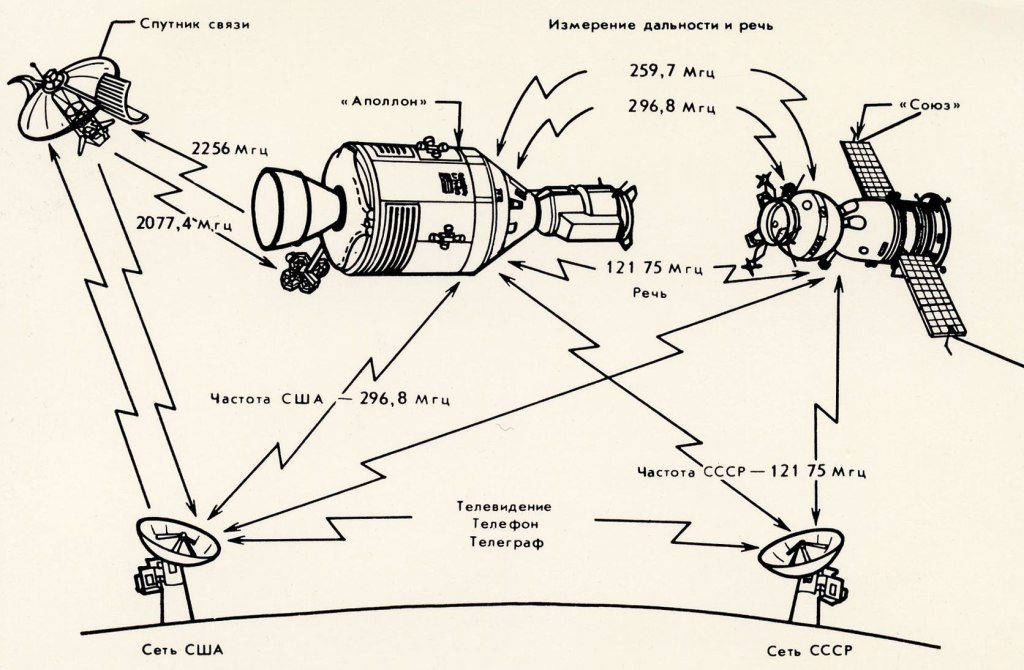
Radio communications procedures for the joint flight:
 Translating History