
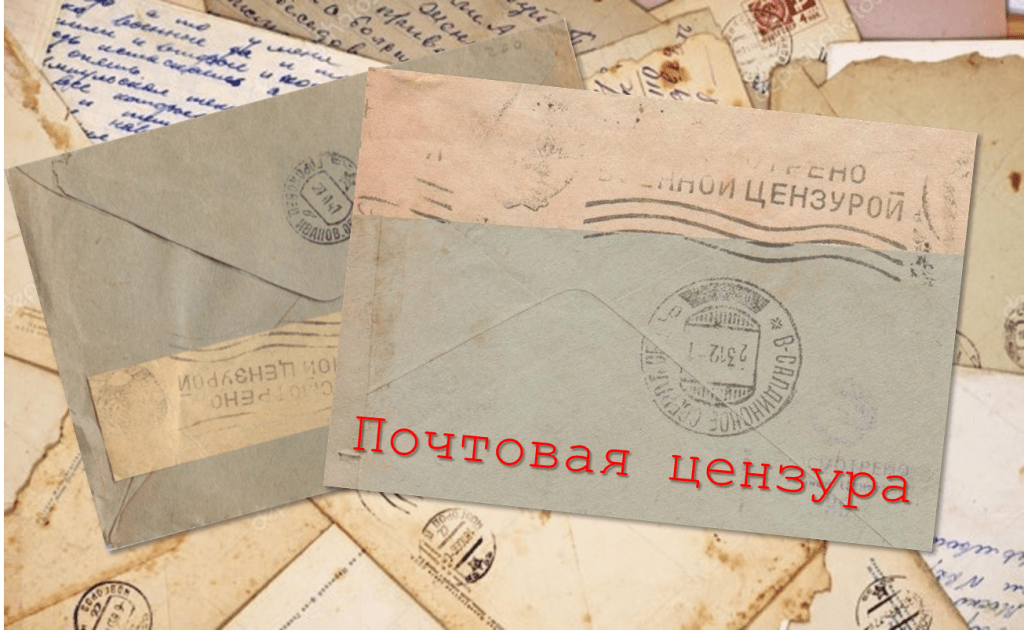
Postal censorship was never unique to the Soviet Union. Often most associated with wartime correspondence between deployed servicemen and their families back home, in many countries censorship was accepted as a small price to pay to keep operationally sensitive information out of enemy hands. Also generally accepted is the understanding that, once peace has been declared, the censors could stand down and resume their normal lives.
But in the USSR, censorship was the routine before, during, and after wartime. There was never a time that letters, postcards, and other forms of communication weren’t scrutinized for what was deemed as potentially harmful or subversive. It often took only the smallest grain of discontent from correspondents to implicate them in spreading counter-revolutionary dogma; the recipients, too, would also be under the microscope – why else would someone feel comfortable sending a communique their way if they hadn’t already established themselves as sympathetic to that cause?
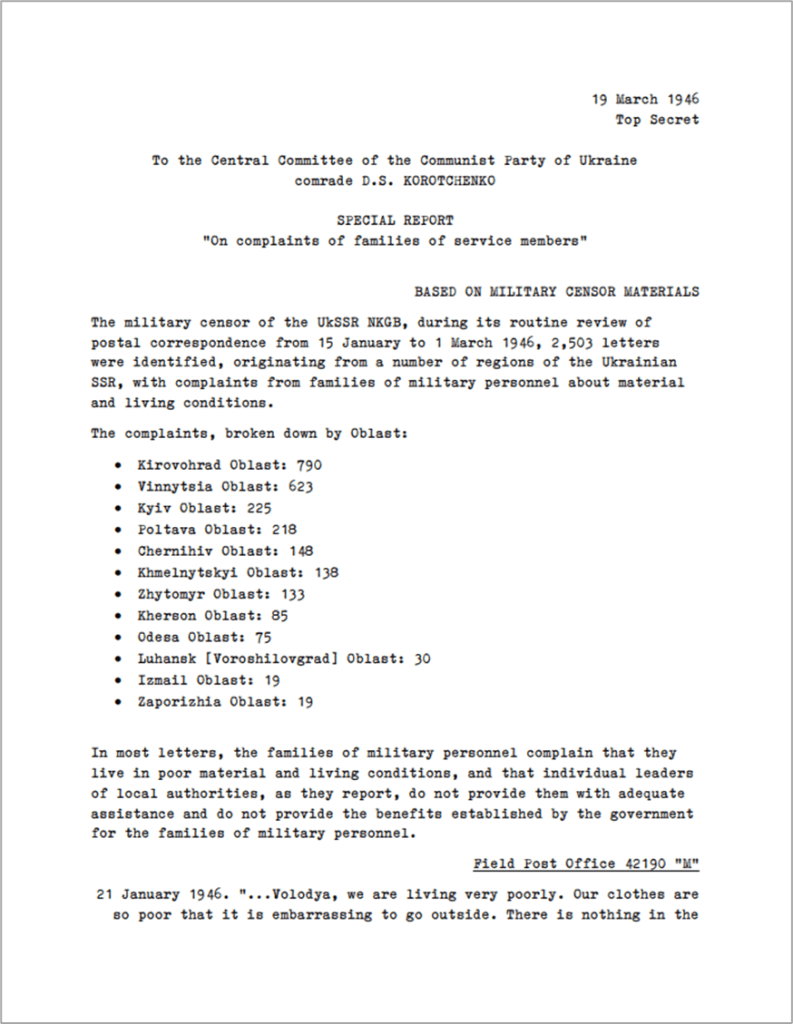
The following attachments are from a Top Secret report, sent in March 1946 to the Central Committee of the Ukrainian Communist Party (specifically to D.S. Korotchenko) from the Deputy People’s Commissar of State Security of the Ukrainian SSR, D. Yesipenko.
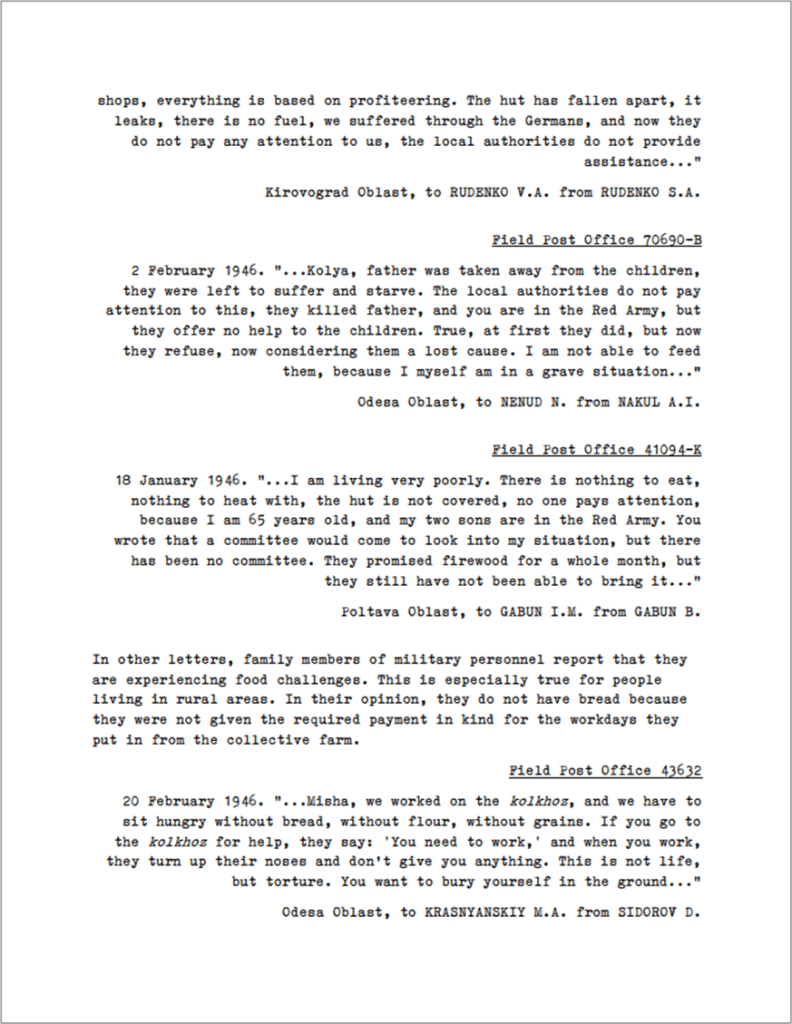
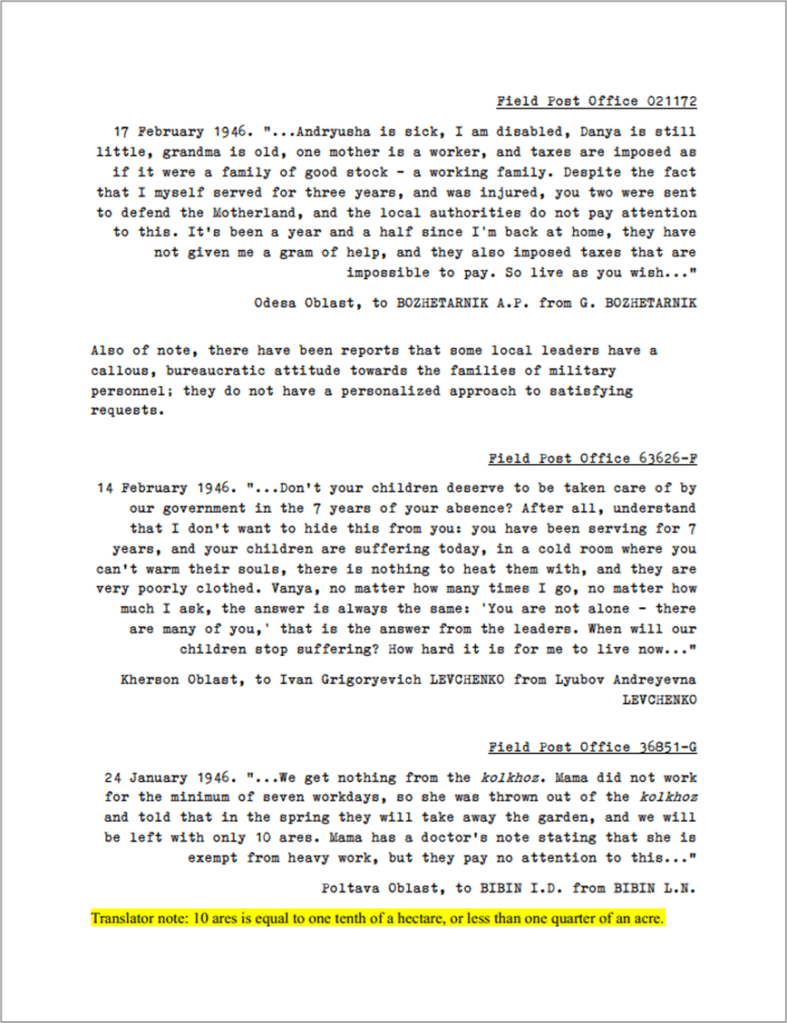
The report covers complaints from family members of Ukrainian servicemen. While the men were presumably off tending to post-war cleanup and peacekeeping activities, the families identified in the report wrote to them, bemoaning their pitiful situations: squalor, starvation, or facing unfair taxation with no way to satisfy the tax collectors. The picture presented to the modern-day reader looks bleak across the board.
At the end of the report, Yesipenko instructs that the regional Communist Party committees in the highlighted Ukrainian regions were informed of the censors’ findings. This statement can be taken at face value, but who would have to answer for the damning information contained in the letters is a complex question, the answer to which is left up to the imagination of the today’s audience.


 Translating History