
On 6 March 1953, a massive warm front struck otherwise icy northern Europe, and wound its way east- and westward, eventually circling the globe. The reason for the warmer than normal air temperatures was the massive sigh of relief simultaneously exhaled from the entire population of the Soviet Union upon learning that Josef Stalin was dead. And not only merely dead, but clearly most sincerely dead. The butcher responsible for the death of untold millions was no longer in power, no longer wielding a cruel fist over the people he ruled. Three years later, in February 1956, the brutality of his crimes began to see the light of day with Nikita Khrushchev’s ‘Secret Speech.’
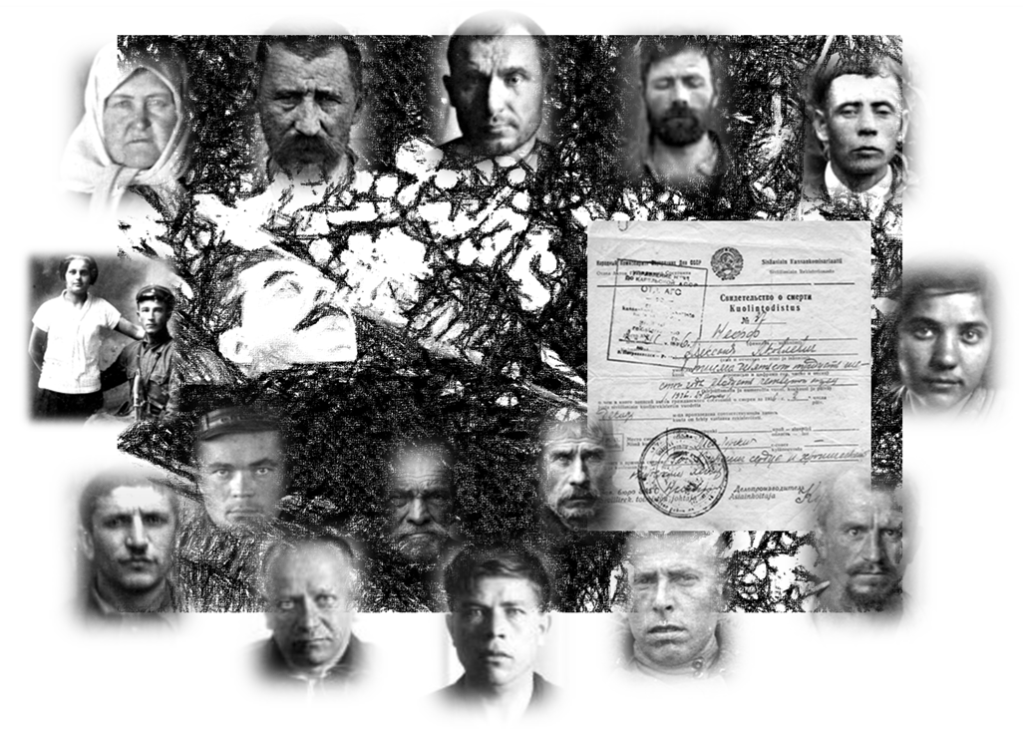
Khrushchev’s speech set in motion a flurry of activity within and without the Kremlin. Soviet citizens wanted answers. Prisoners began returning from GULAGs as a result of the general amnesty issued after Stalin’s corpse was stuffed by Moscow’s best taxidermists. And the returning prisoners had plenty to say to family and friends, not only about their own illegal imprisonment, but about the executions of many whose family members were told had passed away from natural causes. In the image above, the certificate indicates that a prisoner, who had been executed in 1937, perished in detention from pneumonia in 1942. Neighbors began sharing information, and the Kremlin suddenly had a challenge on its hands.
The authorities obviously realized that the concealment of the scale of the mass extermination of people was only possible at the cost of equally massive lies. Reviewing criminal cases between 1954 and 1961, the guardians of the system “rehabilitated” approximately half of the victims of repression who had been executed extrajudicially (pronounced in some parts as “illegally”), but at the same time, Vladimir Semichastny, the head of the KGB at the time, admitted “with regard to most of them, relatives were given false information about the death, allegedly occurring in places of detention.”
In December 1962, Semichastny disseminated a Top Secret letter to the Central Committee of the Communist Party of the Soviet Union regarding the issue, and the need to make some amends. We’ve translated this letter and provide it below.

Top Secret
Copy No. 1
26 December 1962
No. 3265-s
CC CPSU
In 1955, with the knowledge of the authorities and in agreement with the Prosecutor’s Office of the USSR, the KGB issued instruction No. 108ss to KGB elements which defines procedures for considering applications from citizens interested in the fate of persons executed at the order of non-judicial bodies (the former Collegium of the OGPU [Joint State Political Directorate], the troikas of the OGPU-NKVD-UNKV and the Commission of the NKVD of the USSR and the Prosecutor of the USSR). In accordance with this instruction, the state security bodies inform the family members of the convicted that their relatives were sentenced to 10 years of corrective labor camps and died in places of detention, and in necessary cases, when resolving property or other legal issues, they officially record the death of those executed in the registry offices, issuing certificates to the applicants in which the dates of death are indicated within 10 years from the date of arrest, and the causes of death are fictitious.
The establishment of this procedure in 1955 was motivated by the fact that a large number of people had been unjustly convicted during the period of repression, and therefore, disclosing the true fate of those repressed could negatively affect the situation of their families. Furthermore, it was assumed that informing family members of the true fate of their executed relatives could be used at that time by certain hostile elements to the detriment of the interests of the Soviet state.
The existing procedure for reporting fabricated data mainly concerns innocent Soviet citizens who were executed by decisions of extrajudicial bodies during the period of mass repressions.
As a result of a review of criminal cases from 1954 to 1961, approximately half of those executed extrajudicially were rehabilitated. In most of these cases, relatives were given false information about the death, supposedly occurring in places of detention.
Following the work carried out by the Central Committee of the CPSU to expose the illegalities committed during the period of Stalin’s cult of personality, we feel it necessary to abolish the existing procedure for considering applications from citizens inquiring about the fate of their relatives.
Communicating to citizens fictitious dates and circumstances of the death of loved ones puts state security agencies in a false position, especially when publishing in the press the dates of death of individuals who had previously rendered services to the party and the state. In addition, registering the deaths of persons executed by decisions of extrajudicial bodies, indicating fictitious periods of imprisonment in the documents, places members of their families at a disadvantage when establishing pensions compared to members of the families of persons executed by court order.
Soviet people are aware of the mass violations of socialist legality, and the reasons for the procedure of informing relatives about the fate of repressed family members established in 1955 are no longer relevant.
In view of the foregoing, it seems appropriate to henceforth respond to inquiries from citizens about the fate of their relatives who were sentenced to execution by firing squad without trial by verbally informing them of the actual circumstances of these persons’ deaths, and to register their deaths in the civil registry offices with the date of the execution, without specifying the cause of death, as is done by the Military Collegium of the Supreme Court of the USSR and military tribunals in relation to persons executed by court sentences.
It is understood that this procedure will not apply to individuals for whom responses were provided in accordance with previously established and currently valid procedures for considering applications.
Notifying citizens of the actual cause of death of convicted persons will give members of their families, who are entitled to survivor’s pensions, grounds to petition the relevant authorities for the granting of pensions on preferential terms, as relatives of persons who died from work-related injuries or perished while performing their official duties.
It should be noted that the number of applications concerning the fate of those convicted through non-judicial procedures is decreasing every year (36,225 in 1959, and 8,018 in the first eight months of 1962).
The procedure established by the Presidium of the Council of Ministers of the USSR on 15 December 1959 (Protocol No. 37) for communicating abroad the dates of death of those sentenced to execution, taking into account the circumstances of each case, but not earlier than the dates of execution of the sentences and no later than 10 years from the date of arrest, should, in our opinion, remain unchanged.
This proposal has been coordinated with the Prosecutor’s Office of the USSR and the Supreme Court of the USSR.
Please review.
Committee Chair
Translation © 2025 by Michael Estes and TranslatingHistory.org
 Translating History