
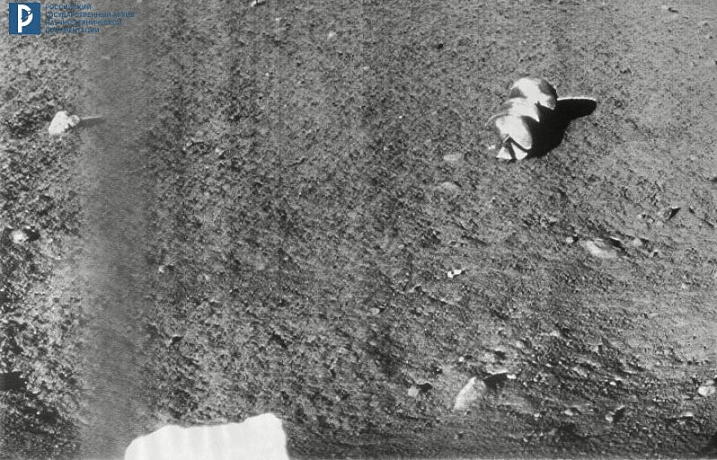
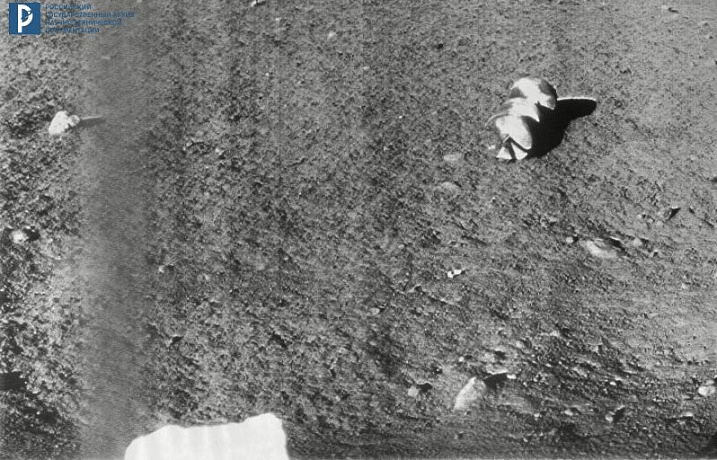
On December 26, 1966, the Soviet-developed interplanetary spacecraft Luna-13 transmitted to Earth a photo panorama of the lunar surface, on which objects resembling parts of apparent man-made origin can be seen. On 26 December 2025, the 59th anniversary of the Luna-13’s achievement, the Russian State Archive of Scientific and Technical Documentation [RGANTD] published declassified documents that help to shed light on this “cosmic mystery.”
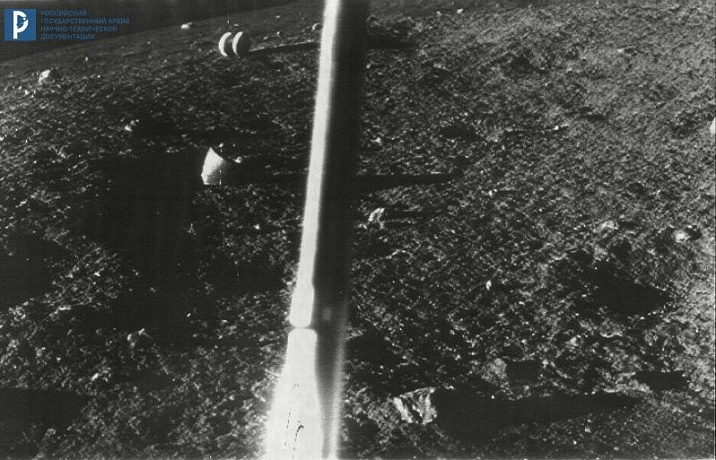
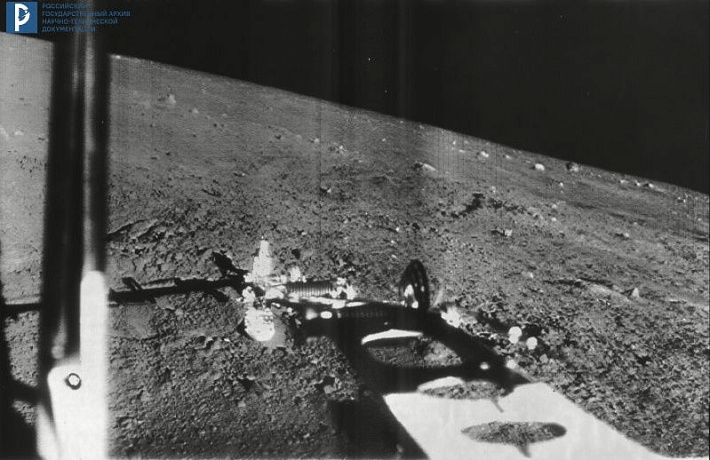
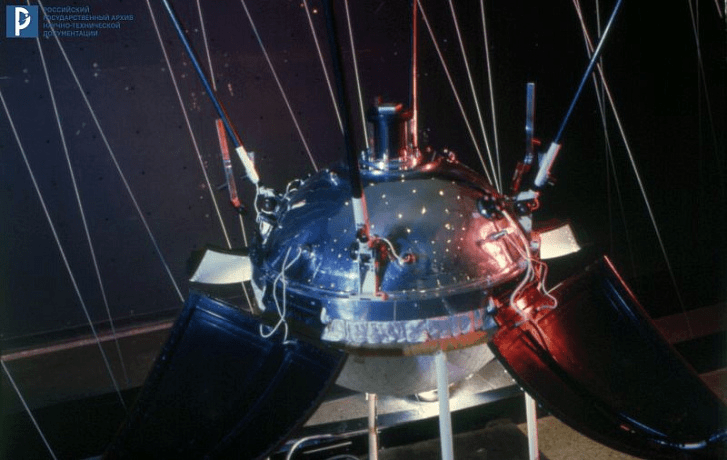
Two days before sending the odd photos, on December 24, 1966, the Luna-13 station made a soft landing in the Ocean of Storms [Oceanus Procellarum]. The station operated on the lunar surface for more than three days and transmitted to Earth three photo panoramas of the Moon, taken at different altitudes of the Sun. It was in the image from December 26 that some enthusiasts and researchers decades later saw unusual objects that gave rise to speculation about “lunar artifacts.”
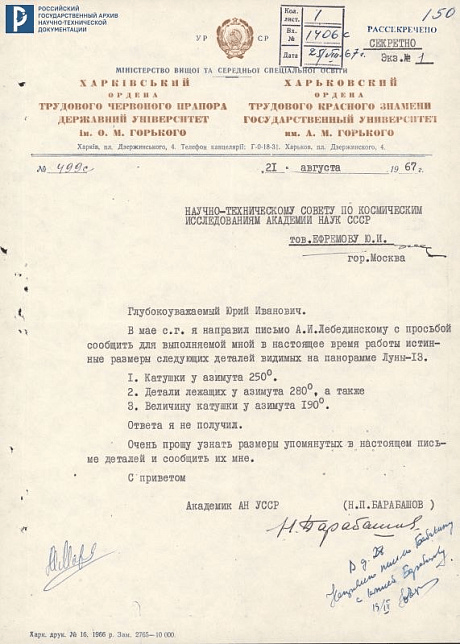
The answer to this riddle can be found in the archives of the RGANTD. The ‘First Space Archive’ contains previously classified correspondence directly related to these images. On August 21, 1967, Academician of the Academy of Sciences of the Ukrainian SSR N.P. Barabashov sent an official letter to the Scientific and Technical Council for Space Research of the USSR Academy of Sciences with a request to report the true dimensions of the parts visible in the panorama. Academician Barabashov referred to these “mysterious details” as “coils” (F. 213. Op. 6-6. D. 148. L. 150).
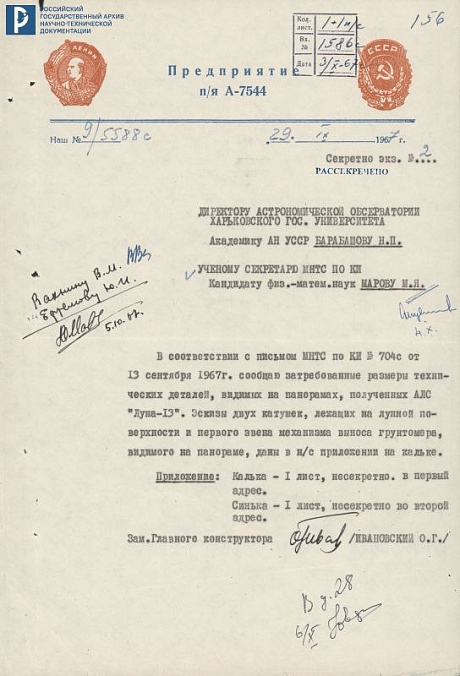
The clarification came back on September 29, 1967 from O.G. Ivanovskiy – Deputy Chief Designer of the Lavochkin Machine-Building Plant, the creator of Luna 13. In his letter to N.P. Barabashov (F. 213. Op. 6-6. D. 148. L. 156), he confirmed that in the first two panoramas the coils are indeed visible, and the third showed a fragment of the soil meter removal mechanism. Attached to the letter was a tracing paper with the exact dimensions of these technical elements of the station (F. 213. Op. 6-6. D. 148. L. 157).
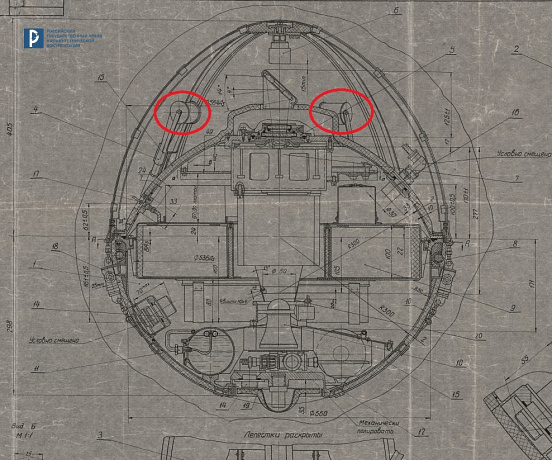
Thus, the “mysterious artifacts” turned out to be standard parts of the spacecraft itself – coils on which the 75-centimeter self-deploying whip antennas were wound. These coils can be seen on a fragment of the drawing of the automatic lunar station (F. 6. Op. 90-2. D. 145), where they are outlined in red ink. The drawing also shows other elements: a hermetic container, an antenna, a porthole, a frame, and various other pieces of equipment.
In total, the RGANTD photo catalog contains 66 photographs taken from the Luna-13 spacecraft – valuable documentary evidence of the early history of lunar exploration.


Translation © 2025 by Michael Estes and TranslatingHistory.org
 Translating History