
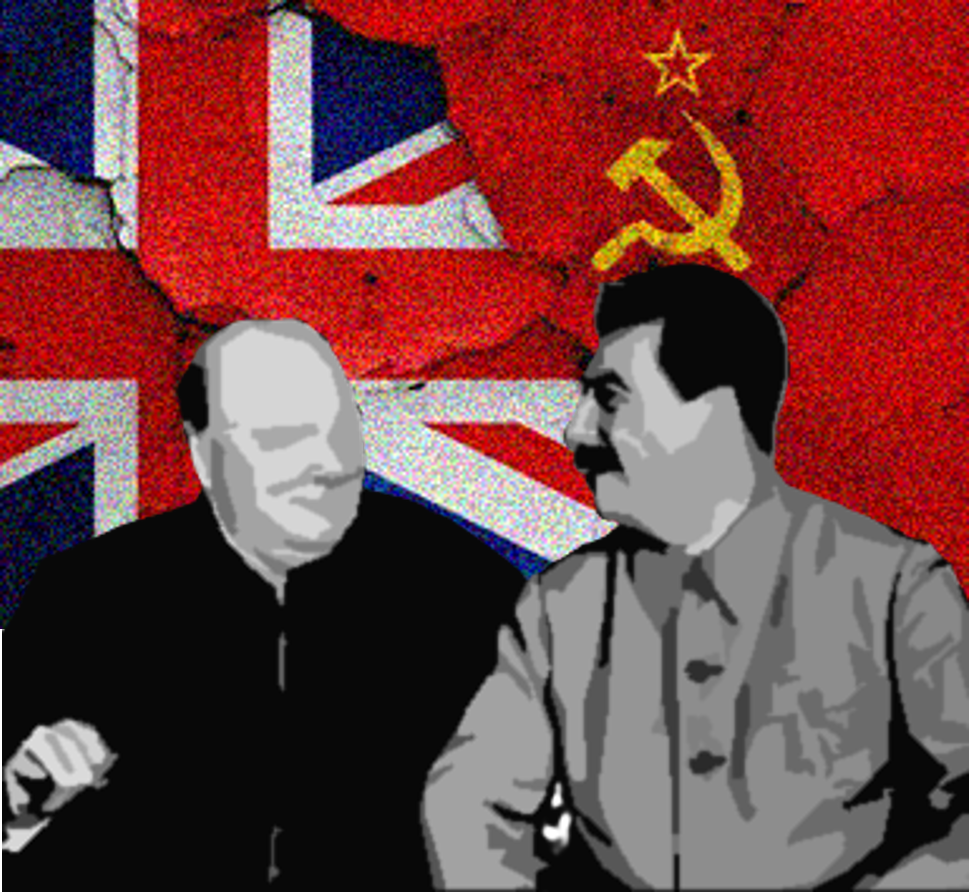
When published in June 1945, the Joint Intelligence Sub-Committee (JIC) paper on “British Empire Security” was the talk of the town (London, that is). The 68-page Top Secret document, written as the war in the Pacific still raged on,provided a security roadmap for the United Kingdom for the period 1955-1960, identifying potential threats to the Empire across the globe in a ranked order, and calling out methods to mitigate or eliminate the threats. Perhaps not surprisingly, one of Great Britain’s World War 2 allies was called out as its greatest potential existential threat: the Soviet Union. Less than half a year later, the same document was the talk of another town – Moscow.
In early November 1945, a Soviet mole with ties to the London station of the Soviet foreign intelligence service (believed, but not proven, to be Kim Philby) was able to obtain a copy of the document, translate it into Russian, and transmit it through clandestine channels to Josef Stalin and other high-ranking members of Soviet leadership.
The report is a post-WWII policy document that assessed global threats and argued that MI5 operations must remain completely insulated from partisan politics and purely focused on safeguarding the Commonwealth. It advanced the thesis that, in the post-war period, the Soviet Union posed a security threat to the British Empire and constituted the primary common adversary of all Western nations. British military strategists recommended that the country’s leadership strengthen relations with the United States in order to establish a system of military-political blocs directed against the USSR; to encircle it with a network of military bases; to isolate it through the creation of a system of regional organizations; and to utilize the UN and other international bodies for these purposes. This constituted a long-term strategy and set of tactics for the struggle against the Soviet Union.
Note: The following is presented solely as a full-circle (reverse) English translation of the 1945 Russian translation of the original. It is not intended to be an effort to replicate the original English document, given the challenges of maintaining exact wording in full-circle translations.
Additional note: Yes, I used American vs. British spellings. It was a long day.
The original Russian translation runs 68 pages long; the version provided to Translating History is approximately half that length, presumably to focus on specific areas of interest to the Russian historian. We hope that our translation continues to similarly reflect that focus.

6 November 1945
TOP SECRET
To Comrades STALIN, MOLOTOV, BERIA
Herein, the NKGB of the USSR submits a translation from English of the report ” British Empire Security,” dated June 29, 1945, prepared by the Post-War Planning Staff of the British Chiefs of Staff Committee.
The report primarily examines the potential threat to Great Britain posed by the USSR and measures to prevent it.
People’s Commissar for State Security of the USSR (B. Merkulov)
Top Secret
29 July 1945
BRITISH EMPIRE SECURITY
Report of the Postwar Planning Staff
1. In accordance with the instructions received, we have prepared a review of Imperial security issues worldwide for the period 1955–1960. We have reviewed the regional studies already submitted by the Chiefs of Staff. This review has been prepared in the form of a draft document for submission by the Chiefs of Staff to the Ministers.
2. We have not found it possible to provide anything more than the actual formulation of the objectives of the general strategy. This memorandum is intended to serve as a strategic guide for the Foreign Ministry, and as the strategic background required by the Ministries of War, the Navy, and the Air Force for planning our post-war Armed Forces. To ensure that this planning secures the most effective utilization of our capabilities, it is necessary:
a) To thoroughly study and assimilate the provisions set forth in the report prepared by the committee headed by Henry Tizard, which addresses issues of scientific and technical development in the context of warfare; and
b) Analyze the key strategic and technical lessons learned from this war, taking into account the role of all branches of service.
3. In Paragraph 28 of the attached memorandum, we have very briefly touched upon some of the most important issues pertaining to the assessment of our preparedness for war. Some of these matters are already being examined by the relevant committees, and we recommend that these bodies be apprised of this memorandum.
4. As is evident from this memorandum, the question of the threat posed by a hostile USSR figures prominently in our analysis of the overall strategic problem facing Great Britain. However, we do not assert that war with the USSR is probable. We have refrained from engaging in any form of political forecasting. The emphasis we have placed on the threat from the USSR is based exclusively on the fact that, if one excludes the United States and former enemy nations, the USSR remains the only country capable of posing a serious threat to the security of the Empire.
In the near future, decisions must be adopted providing for the implementation of measures concerning the security of the Empire; and we deem it essential to guard against the possibility of underestimating the military consequences of a threat from the USSR, should such a threat ever arise.
5. The Chiefs of Staff may wish to draw the Ministers’ attention to the fact that the attached memorandum proceeds from the assumption that the United Kingdom, the Dominions, and India will pursue a coordinated strategic policy in peacetime that takes into account the defense interests of the Empire as a whole.
BRITISH EMPIRE SECURITY
Table of Contents
Introduction
Main Conclusions
Imperial Security Objectives
Imperial Grand Strategy
Imperial Defense Scheme
Further Conclusions
Section I — Germany and Japan. Section II — The USSR.
Part I — The Threat
Part II — Offensive Countermeasures
Defensive Measures
Prioritization of Defensive Tasks
Section III — Secondary External Threats and Internal Security. Section IV — International Organization.
Section V — Dominion Cooperation
Introduction
General Remarks
1. This memorandum presents an overview of the problems of Imperial security. Its purpose is to define the strategic objectives of our foreign policy and to outline the foundation upon which our prospective plans for the defense of the Empire must be built.
[Translator note: For the sake of brevity, the Russian translation uses the expressions “British Empire” and “the Empire,” which are understood as referring to the United Kingdom, the Dominions, India, and the colonial empire.]
2. This review covers the period from 1955 to 1960. Were we to consider an earlier period, our interests in the more distant future could be influenced by our security requirements during the period immediately following the defeat of Germany and Japan.
3. We have examined the security challenges facing the British Empire as a whole. If a coherent strategic policy cannot draw upon the resources of the entire Empire, in accordance with a coordinated imperial plan, then the influence and security of each of its individual parts will be seriously undermined.
4. The primary objectives of Imperial security are:
a) the preservation of the integrity of the British Empire against external and internal threats;
b) ensuring the security of maritime and air lines of communication, upon which the cohesion of the empire, its access to key raw materials, and its productive capacity depend.
5. Imperial security is, in essence, a problem of preventing, and precluding the possibility of, other powers imposing their will upon us. This demands political engagement and military power. Diplomacy can avert certain threats and mitigate others; it can facilitate the acquisition of allies whose armed assistance or territory are vital in wartime. However, diplomacy cannot succeed on its own unless it is backed, and is known to be backed, by sufficient military force to convince both our friends and our potential adversaries of our capability and resolve to fulfill our commitments. Since the international situation can deteriorate far more rapidly than armed forces can be raised, military preparedness is of paramount importance, however reassuring the international outlook may appear. Military power, of which compulsory military service would serve as a key indicator, thus becomes indispensable for ensuring the success of diplomacy and averting its failure.
Potential foes
6. Below, we examine the powers that, either singly or in combination, could pose a significant threat to the security of the British Empire.
7. Germany and Japan. Provided that Germany and Japan are disarmed, and that effective measures continue to be taken to prevent their rearmament, neither of these countries will be able to pose a threat to the British Empire. However, we cannot be certain that control over these countries will remain equally effective during the period 1955–1960. By that time, occupation forces may well have been withdrawn, and Germany and Japan may succeed in rearming themselves to a significant extent by exploiting the rivalries among the Great Powers. Although it will be our duty to thwart their illicit rearmament through timely offensive action, we must nevertheless reckon with the possibility that a serious threat could emerge from either of these countries during the period under review.
8. France. It is doubtful that France will have acquired the might of a great power by 1955. The strategic interests of France and the British Empire are intertwined throughout the world, and it is to be hoped that France will realize that close cooperation with the British Empire is most advantageous to its interests. If it fails to cooperate with us, it will become a strategic impediment, although, standing alone, it cannot pose a serious threat.
9. China. Although China possesses substantial human reserves, it is unlikely to possess the political stability and industrial resources that would enable it, acting alone, to seriously threaten our interests.
10. The USA and the USSR. Both the USA and the USSR possess sufficient potential to pose a serious threat to the security of the British Empire. With regard to the USA, we consider ourselves justified, given that country’s shared heritage and common language with our own, to rule out the possibility of war arising from any disagreements or clashes of interest. Indeed, it seems reasonable to assume that the British Empire and the USA will maintain the same unity in matters of fundamental defense as is observed at present. We are not bound to the USSR by similar ties. It would be imprudent to attempt to predict the nature of the relations that will exist between us and the USSR ten years hence; the fact remains, however, that the USSR has demonstrated that it possesses a military potential capable of posing a serious threat to the British Empire. Therefore, in assessing the requirements of Imperial security, we are obliged, as a matter of simple prudence, to take full account of the USSR’s potential capabilities. A specific policy aimed at ensuring our military preparedness may well prove to be the most effective deterrent against the USSR, should it contemplate aggression.
The Duties of Our Armed Forces
11. In order to satisfy the fundamental requirements of imperial security, our strategic policy must take into account:
a) the possibility of war with the USSR;
b) the necessity of preventing the possibility of a resurgence of Germany and Japan;
c) the possibility of armed conflict with small powers;
d) the necessity of maintaining internal security;
e) obligations to place armed forces at the disposal of an International Organization.
Imperial Defense Obligations
17. The nations that, in the period 1955–1960, will possess sufficient military power to pose the most serious threat to the British Empire are the USA and the USSR. However, since the possibility of war with the USA is ruled out, our primary duty in the sphere of defense is to safeguard the Empire against the possibility of hostile acts directed against us by the USSR.
18. To ensure the security of the Empire, our armed forces will be required to discharge the following duties:
a) the protection of British territories and Imperial communications against Soviet aggression;
b) the exercise of control over Germany and Japan, and the prevention of their resurgence;
c) the protection of British interests against secondary external threats;
d) the maintenance of internal security;
e) participation in the International Organization.
19. The armed forces of the British Empire must be sufficient to enable all members of the Empire to exert due influence on international affairs and to serve as a deterrent to any potential aggressor.
General Imperial Strategy
20. a) A USSR hostile to us—provided that it retains its political cohesion and military might—will pose so great a threat to the British Empire that the primary objective of our policy must be the prevention of a clash therewith; the stronger we are, and the stronger we are perceived to be, the more certainly shall we achieve this objective.
b) It is of the utmost importance that the USSR does not join forces with Germany against us.
c) The members of the British Empire must act in unison if they wish the Empire they constitute to enjoy the status of a Great Power comparable to that of the United States or the USSR. Now, more than ever, it is essential that a coordinated strategic policy be pursued — one grounded in the resources of the entire Empire, as accounted for within a coordinated, Empire-wide plan.
d) The united British Empire alone, without the assistance of powerful allies, will be unable to safeguard global interests against Soviet aggression.
e) We should foster close cooperation between the British Empire and a strong France in order to advance our common interests throughout the world.
f) An international organization can facilitate international cooperation; therefore, we have a significant strategic interest in its success. However, an international organization will not relieve the British Empire of the responsibility to take measures to safeguard its security.
g) In order for the international organization to evolve in a manner that provides maximum support for Imperial security, we must:
1) to encourage the idea of regional security treaties stipulating that each great power bears primary responsibility for maintaining general peace in the region where its interests predominate;
2) to persuade the United States to assume specific military responsibility in areas of our shared interests.
21. The relative importance to be attached in peacetime to areas liable to face a serious threat from the USSR is as follows:
a) Priority must be given to the defense of the United Kingdom — the center of the Empire, its primary operational base, and the principal reservoir of white manpower reserves and industrial capacity — as well as to the defense of vital sea lanes and air routes in the Atlantic Ocean.
b) The defense of the Indian Ocean region ranks second only to the defense of the United Kingdom. It constitutes a vital link in the chain of Imperial communications; India possesses great potential value both as a base and as a source of manpower reserves and industrial resources.
c) During a war, the Middle East will be exposed to a direct threat, and the oil fields in Iraq and Persia, which define our primary strategic interest in this region, will be impossible to defend. Maritime and air lanes of communication in the Middle East are of lesser importance than those in the Indian Ocean and, moreover, could be severed as a result of operations in Europe. Therefore, the defense of the Middle East must not be secured at the expense of the security requirements of India and the Indian Ocean.
d) The defense of the Pacific region should take last place (after Western Europe, the Indian Ocean region, or the Middle East), since the threat in the Pacific will be comparatively remote.
Imperial Defense Structure
22. The Armed Forces of the Empire must be prepared to fulfill their duties to defend the Empire in accordance with the general strategy outlined above.
23. Since a USSR hostile to us poses the maximum threat to the Empire, measures must be taken to ensure that we are able to:
a) play our part in localizing the initial Soviet offensive;
b) defend vital areas, bases, and lines of communication, and subsequently
c) fully deploy our resources in cooperation with our allies and meet the demands of a prolonged war.
The preparedness of the Empire’s armed forces and military economy must be based on a current assessment of the nature of the Soviet threat.
24. Measures adopted to counter the Soviet threat would simultaneously, in broad terms, cover the actions required to meet our defensive requirements regarding a resurgent Germany or Japan. However, adequate forces must also be held in readiness for timely offensive operations, in order to deal with the illicit rearmament of these countries and to reoccupy them, should this prove necessary.
Our further conclusions, by area, are as follows:
Western Europe, the North Atlantic Ocean, and the western part of the Mediterranean Sea
29. a) The security of the United Kingdom and its vital lines of communication would be seriously jeopardized if any hostile power were to establish a strong foothold in Western Europe or on the Atlantic coast of Northwest Africa.
b) Germany’s capacity to wage war must be eliminated. Its unauthorized rearmament must be countered by timely offensive actions and, if necessary, by reoccupying its territory.
c) In order to counter the threat posed by the USSR or a rearmed Germany, we must:
I) increase the depth of our defense by establishing, in cooperation with allies, an air defense belt in Western Europe;
II) be prepared to defend the United Kingdom against air and sea invasion;
III) ensure the decentralization and protection of the United Kingdom’s industry;
IV) be capable of providing rapid assistance to our continental allies and taking measures, even in peacetime, to receive reinforcements from the United States in the United Kingdom and France;
V) to secure the ability to utilize, in wartime, a system of naval and air bases on islands of the Atlantic Ocean, particularly the Azores, in Western Europe, and in Scandinavia;
VI) Control the Strait of Gibraltar and prevent the enemy from entering Northwest Africa, Sicily, and Sardinia.
d) We must take the initiative in forming a Western European group of nations, intended initially to exercise control over Germany. In addition to the United Kingdom and France, this group should include: Eire, Belgium, the Netherlands, Norway, Denmark, Iceland, Portugal, and, if possible, Spain and Italy. The effectiveness of this group in the face of the threat from the USSR will depend on immediate assistance from the United States.
e) Although the aforementioned measures are the most effective we can devise, we must not underestimate the dangers that the USSR might acquire a foothold in Western Europe and gain access to the North Sea and Atlantic Ocean coasts.
India and the Indian Ocean
30. a) An immediate threat to India lies in an air or airborne landing attack from the northwest. Although the difficulties associated with the movement of large formations should limit the scale of a Soviet land attack on northwestern India, the existence of a threat of a ground or airborne invasion necessitates the allocation of substantial forces to counter this threat.
b) The air defense system along India’s land borders must be designed, first and foremost, to counter the threat from the northwest. It is necessary to prepare for civil defense and to provide for the decentralization of industry and the preparation of bases.
c) Forces designated for the defense of India against ground or airborne invasion must be highly mobile. To enhance the strategic mobility of these forces, it is necessary to improve the unpaved roads leading from Central India toward the Afghan and Persian borders, as well as into Burma.
d) The protection of our maritime lanes of communication and air routes will require an entire system of naval and air bases throughout the Indian Ocean, including a major operational base on Ceylon.
e) We must prevent the spread of Soviet influence in Afghanistan.
f) The development of India’s military potential is of great strategic importance, so that it may be in a position to make a maximum contribution both to its own defense and to the military efforts of the Empire as a whole.
g) We are highly interested, from a strategic standpoint, in the maintenance of internal security in India and Burma; it is therefore of the utmost importance that conditions of political stability and contentment prevail in these countries.
The Middle East and the Eastern Mediterranean
31. a) The oil fields in Persia and Iraq would be extremely vulnerable in the event of a war with the USSR, and even the Suez Canal zone cannot be considered safe.
b) Therefore, it is essential to take the following steps during peacetime that will reduce the strategic importance for us of the following during wartime:
I) the oil resources of Iraq and the Persian Gulf region;
II) our maritime lines of communication and air routes in the Mediterranean Sea;
III) our main military bases in the Middle East—that is, in Egypt.
c) Nevertheless, it is of vital importance that, in peacetime, we maintain our dominant position in the Middle East and that our military power in this region is commensurate with this objective. The Middle East is, in any event, the most suitable location for an imperial strategic reserve. The slightest indication that we are prepared to withdraw from our current positions would undermine our prestige and invite Soviet encroachment. Such consequences are unacceptable, both on strategic grounds and for political and commercial reasons.
d) We must endeavor to ensure that the United States assumes military commitments for the defense of the Middle East, as this would serve as a powerful deterrent against Soviet aggression.
e) In order to be able to delay the Soviet advance, we must endeavor to:
I) increase the depth of our defensive system, insofar as possible, in the northern axis;
II) ensure depth in the rear of our defenses through a system of reserve bases in more secure areas. These measures will limit the development of a threat to the Indian Ocean and Northwest Africa via the Middle East.
f) We must maintain our traditional friendship with Greece. We must endeavor to prevent the USSR from threatening the independence of Turkey and Persia.
Southeast Asia and the Pacific Ocean
32. a) The strategic interests of the British Empire require the constant containment of Japan. To this end, we must be prepared to provide the necessary forces, together with our allies.
b) The threat to British interests posed by the USSR in Southeast Asia and the Pacific is relatively remote. Furthermore, we can count on an immediate reaction from the United States to Soviet aggression in this region.
c) The protection of the interests of the British Empire against aggression by the USSR or a rearmed Japan would best be achieved through the establishment, in cooperation with the USA and China, of a system of advanced naval and air bases, extending from Formosa, through the Philippines, the Caroline Islands, and the Marshall Islands, to Midway Island.
d) If Formosa cannot be held, the strategic importance of Indochina will increase significantly. The French should be encouraged to cooperate with the United States and the British Empire in taking measures to defend Indochina.
e) We must endeavor to ensure that China’s vast potential resources, particularly its human resources, are more accessible to the United States and ourselves than to the USSR. In any event, we must prevent the USSR from acquiring greater influence in China than that currently held by the United States and ourselves.
f) It is important that Holland and Siam, as well as France, cooperate fully with the British Empire in adopting regional measures for the defense of Southeast Asia.
Southern Atlantic Ocean, Africa, and the Caribbean region
33. a) The capacity of the ports along the route to the Cape of Good Hope, and of the airfields on trans-African air routes, must be increased in peacetime so that they may serve as a suitable alternative to the Mediterranean routes in wartime.
b) Although the Soviet threat to the Caribbean region is remote, it is nonetheless in our interest to establish a regional defense system there in which the United States would play a dominant role. This would serve to protect maritime routes to Australia and New Zealand via the Panama Canal, as well as air routes through British Honduras.
Section I
GERMANY AND JAPAN
34. A military resurgence of Germany or Japan would pose a serious threat to the security of the British Empire. Therefore, from a strategic standpoint, we have a vital interest in preventing such a situation. The United Kingdom, supported by the Dominions, must pursue this course, regardless of whether or not this task is undertaken by an international organization.
35. There exist well-known prerequisites for effective military measures, which are also applicable to the control of Germany and Japan—namely:
a) the restrictions imposed must be simple and clear;
b) a reliable intelligence service — political, economic, and military — paying particular attention to scientific inventions in the field of new weaponry, is absolutely essential;
c) simultaneously, adequate military resources must be maintained in a state of constant readiness;
d) there must be a political readiness to employ armed forces in the event of non-compliance with controls. This presupposes a public opinion prepared to support such military measures.
36. It is impossible to predict the degree of effectiveness of control measures by 1955. It must be assumed that ensuring compliance with restrictions after 1955, when occupation forces will, quite possibly, have already been withdrawn, will present increasingly greater difficulties. Therefore, we must be prepared to cope with the consequences of inadequate control.
Control Over Germany
37. A firm guarantee on the part of the British Empire, the USSR, the USA, and France to take timely and decisive military measures against Germany constitutes the surest means of ensuring the permanent suppression of its military power. Economic sanctions imposed upon Germany from without would, in themselves, be of little value and would only militate against timely military measures.
38. Active cooperation with the British Empire, primarily on the part of France, but also of Belgium, the Netherlands, Norway, and Denmark, will be of great significance, as it is vital to possess adequate resources in both Western and Eastern Europe. Without the active assistance of Western European states, we would be unable to properly fulfill our role in the West without overstraining our resources. Furthermore, it would be contrary to our interests to allow the USSR to play a dominant role in the reoccupation of Germany, should such a measure prove necessary.
39. It is possible that the United States or the USSR might refuse to cooperate with us. Such a refusal could be either the cause or the consequence of the failure of the International Organization. As a result, the authority of the countries continuing to control Germany would be undermined, and Germany would be inclined to display greater insubordination.
40. If the United States ceases to be interested in the control of Germany, the USSR and the British Empire, acting jointly, will encounter no difficulties in preventing a German resurgence. As long as these two powers remain united in their policy toward Germany, the continued cooperation of the Western European group with this policy will, in all likelihood, be assured.
41. It is unlikely that the USSR would ever facilitate the rearmament of Germany; however, it is possible that it might refuse to cooperate with us. Should this prove to be the case, and even if neither the USA nor the USSR were to assist us, the British Empire and the Western European bloc would nonetheless possess the capability to forestall a German resurgence, provided that appropriate measures are taken with sufficient speed.
Section II
USSR
Part 1. The Threat.
Introduction
50. Should the USSR embark upon a path of aggressive policy, it is probable that, before resorting to armed force, it will do everything possible to weaken the strategic position of its future adversaries by strengthening its influence in Europe, the Middle East, India, and China through political means and infiltration; concurrently, it will attempt to sow suspicion between the United States and ourselves. We shall be confronted with the perpetual problem of weighing the benefits to be gained by making concessions to the USSR, in the hope of preserving peace, against the consequent detriment to our strategic interests.
51. An aggressive USSR might conduct a lightning campaign to seize strategically vital positions (for example, Persia or Iraq), calculating that we would not take measures to reverse the fait accompli, being unwilling to risk a general conflict for which we are unprepared.
52. The USSR already possesses the largest army in the world. By 1955, it will likely further augment its strike capability through the continued development of its strategic air force and its navy, although the latter may entail significant difficulties for it regarding the training of naval personnel. It must be borne in mind that a threat to the Empire’s vital sea lanes of communication, particularly from submarines and aircraft, would compel us to adopt defensive measures entirely disproportionate to the cost incurred by the enemy in creating such a threat.
53. The location of Soviet industry was primarily determined by strategic considerations. The USSR is largely independent of external sources of raw materials and possesses substantial manpower reserves.
54. Below, we examine, region by region, the nature of the Soviet threat worldwide, and the question of how and where the USSR might pose the most serious danger to the security of the British Empire.
The Middle East and the Eastern Mediterranean
55. It is precisely in this region that Soviet interests are most likely to come into conflict with the interests of the British Empire and, to a certain extent, with those of the United States. The possibility of increasing the defensive depth for its own oil fields, as well as acquiring valuable resources in the Persian Gulf and Iraq, could make control over this region highly tempting for the USSR. Consequently, a military clash is indeed more probable in this area than anywhere else.
56. If the USSR fails to achieve such control through the implementation of specific political measures, its decision to resort to force will likely depend on its assessment of the feasibility of achieving success without becoming embroiled in a global war against the British Empire and the United States. However, if the USSR is confident in its capabilities and attaches sufficient importance to its objectives in the Middle East, even a certain risk of a general conflict may not deter it.
57. In any event, the USSR will fully appreciate the strategic significance, for the war effort of the British Empire and its allies, of the oil fields of Persia, Iraq, and Arabia, as well as of the sea and air routes traversing the Middle East; it will also be fully cognizant of their vulnerability. Therefore, in the event of a global war, an attack on this region would, in all likelihood, constitute one of the primary objectives of Soviet strategy, and the USSR would undoubtedly make full use of all means of propaganda to foment internal unrest there.
58. In view of the disparity of forces — which, in all probability, will prevail during the initial phase of military operations, wherein the initiative will rest with the USSR — the oil fields of Iraq and the Persian Gulf will immediately come under grave threat. The Suez Canal region and the Mediterranean routes will likewise face serious danger.
59. An advance by land through Persia or Turkey must be conducted across territory characterized by limited lines of communication — lines, moreover, that are inherently difficult to improve to a degree that would satisfy the requirements of large armies. Nevertheless, calculations regarding the maximum forces that can supposedly be sustained in areas with limited communications have frequently proven erroneous; furthermore, future advancements, particularly in the field of air transport, will substantially reduce armies’ dependence on ground lines of communication.
60. The extent to which a serious setback in the Middle East will affect our ability to resist elsewhere will depend on:
a) to what extent we succeed in reducing our dependence on Middle Eastern oil resources;
b) to what extent our reserves of tonnage, and tankers in particular, will be sufficient to overcome the disadvantageous position in which we shall find ourselves due to the necessity of utilizing the route around the Cape of Good Hope;
c) the scale of our Imperial air transport and the degree of development of additional air routes across Africa.
Western Europe, the North Atlantic Ocean, and the western Mediterranean
61. The primary British strategic interests in this region are the security of the United Kingdom and of the maritime and air routes across the Atlantic Ocean. Of lesser importance is the security of our lanes of communication between the Atlantic Ocean and the Mediterranean Sea via the Strait of Gibraltar.
62. The nature and magnitude of the threat posed by the USSR in this region will depend, to a significant degree, on the extent of the spread of Soviet influence in Western Europe. In particular, Germany’s stance will be of paramount importance. If Germany succeeds in rearming to some extent, and if the USSR manages to secure its full support, we will face a formidable coalition.
63. The USSR will likely be inclined to employ the bulk of its armed forces for operations in Western Europe, Scandinavia, and the North Atlantic. It is precisely in Western Europe that extensive Soviet ground forces can be deployed to greatest advantage. A successful Soviet campaign would:
a) deprive us of the depth of our defense and of assistance from our continental allies; and
b) grant the USSR access to bases advantageous for:
I) naval and air operations against the vital lanes of communication of the United Kingdom; and
II) destructive air raids, including by long-range bomber aircraft, on our industrial areas and ports.
The seizure of Scandinavia by Soviet forces would have largely ensured freedom of operations for Soviet naval forces based in Arctic and Baltic ports.
64. It is possible that the USSR, particularly if it becomes known that our defenses are inadequate, will, in the initial stages of a war, attempt to launch an airborne landing on the British Isles, or will conclude its operations on the European continent with an attack on these islands from the sea. The USSR will undoubtedly exert every effort to undermine resistance and incite internal unrest within the United Kingdom through propaganda and political warfare.
65. In the western part of the Mediterranean Sea and in the Atlantic Ocean, the security of our interests will depend to a significant extent on the fate of France and on how long it is able to resist in North Africa. If Spain or Italy were to fall into hostile hands, the threat to both French and British interests would increase significantly.
India and the Indian Ocean
66. The sea and air routes within the Indian Ocean region are of the utmost strategic importance to the cohesion of the British Empire, regardless of whether or not the Mediterranean routes are closed. The significance of India lies, firstly, in its value as a reservoir of the forces required for the defense of India itself and of our maritime and air lines of communication; secondly, India can be transformed into a primary administrative base for the forces defending our interests in the Middle and Far East during wartime. Finally, India’s vast manpower reserves and raw material resources, as well as its growing industrial potential, will enable it to make a substantial contribution to the Empire’s war effort.
67. Our maritime lanes of communication in the Indian Ocean will be vulnerable to attack by Soviet aircraft and submarines; moreover, should we lose the Middle East, a threat could emerge from the Red Sea. Both of these threats will significantly strain our resources.
68. India is situated closer to the USSR than any other British territory and may be subjected to attack by land and air from the northwest during the initial stages of hostilities. Given the complexities involved in deploying large Soviet ground forces, stemming from logistical constraints, it is probable that the scale of ground operations against India during the initial stages of a global war would be significantly smaller than that against Western Europe.
69. Even isolated air raids on India’s major cities could significantly impact the effectiveness of the country’s military efforts and contribute to an increase in internal unrest which, in any event, would be encouraged by the enemy.
70. The Soviet threat to India from the east is significantly weaker than that from the northwest, and unless the USSR gains access to the Kunming region of China, Indochina, Siam, and the South China Sea, neither India nor Burma will face any serious danger.
Southeast Asia and the Pacific
71. In this region, we are interested solely in the security of Australia, Canada, and New Zealand, and in their lines of communication with other parts of the Empire. Our interests here are, broadly speaking, in no way at odds with the interests of the USSR. However, it is possible that in China and the Pacific, Soviet interests may come into conflict with those of the United States, and that we may find ourselves drawn into this dispute.
72. An intensification in Soviet influence in China would constitute a potential danger, as the acquisition of bases in southern China by the Soviet Union would enable it to pose a serious threat to Burma and India. Our primary interests in the Pacific would also be jeopardized were the USSR to succeed in gaining control over the sea and air routes leading to the Southwest Pacific.
73. Unless the USSR secures support from China during a war, or achieves significant control over it prior to the outbreak of hostilities, the threat to the British Empire will remain relatively remote; this is particularly true given that the United States, in all likelihood, would react swiftly to any indication that the USSR was shifting toward an aggressive policy in this region.
Summary regarding the threat posed by the hostile USSR
74. A USSR hostile to us could, provided it retains its political integrity and military might, pose an extremely serious threat to the British Empire. Before embarking on war, it would likely make every effort to undermine our strategic position by political means, specifically by encouraging internal unrest, particularly in India and the Middle East.
75. The USSR may initiate military action with a limited objective: namely, the rapid seizure of a region of strategic importance (for example, oil fields in the Middle East), calculating that we would sooner acquiesce to the resulting situation than unleash a global war.
76. However, in a large-scale conflict, the USSR could hope to achieve the most decisive results in Western Europe by attacking the United Kingdom and our vital lines of communication in the Atlantic Ocean. The possibility of an airborne assault on Great Britain during the initial stages of a war must be periodically re-evaluated.
77. An attack on the Middle East, where our sources of oil and our Mediterranean sea and air routes are relatively vulnerable, will almost certainly be one of the objectives of Soviet strategy. In India and the Indian Ocean, the USSR can tie down substantial British forces without expending great effort. In Southeast Asia and the Pacific, the Soviet threat will be remote.
78. In the following paragraphs, we first examine the possibility of offensive operations against the hostile USSR; next, the question of how best, geographically, to safeguard British strategic interests against the Soviet threat; and, finally, the order of priority for regional measures designed to provide protection against this threat.
Offensive Countermeasures
Raw Materials and Industrial Resources
79. The USSR meets its requirements for food and the key raw materials essential to a wartime economy through the use of its own domestic resources. The USSR’s resources are dispersed across various locations, primarily situated at a considerable distance from its borders. There are two exceptions to this pattern: Ukraine, a vital source of food, coal, manganese, and iron ore, and the Caucasus, from which the USSR currently derives approximately three-quarters of its total oil supply. It is probable that the USSR will enhance the security of its Caucasian oil sources by relocating refineries to safer regions and by initiating the development of other oil fields situated in less vulnerable areas. Soviet industry has grown, and appears poised to continue to grow, in locations remote from the borders, and is appropriately distributed. Consequently, areas of economic significance will be largely invulnerable to land-based attack and, to a considerable extent, inaccessible to overwhelming aerial bombardment. By the period 1955–1960, as a result of postwar reconstruction, the USSR’s productive capacity and raw material reserves will be sufficient to render it entirely self-sufficient in the event of war, provided that shortages of materials such as natural rubber are offset through the accumulation of stockpiles and the production of synthetic rubber.
Lanes of Communication
80. The Soviet Union will, in all likelihood, seek to expand its merchant fleet both for economic reasons and to enhance its prestige; nevertheless, it will remain invulnerable to blockade, as its national economy will render it independent of maritime lanes of communication during wartime. Its land lines of communication, particularly in Central Asia and the Far East, are as yet only partially developed; however, they will undoubtedly be improved in the course of industrial reconstruction and will likely be adapted to meet the USSR’s requirements during a conflict. Nevertheless, it will likely be many years before the USSR establishes a system of communications sufficiently extensive to ensure that its war effort cannot be undermined by concentrated and intensified air raids. However, given the vastness of the territory involved, such an offensive strategy would demand an immense effort, an effort that might not yield commensurate military results.
The Internal Security of the USSR
81. It is difficult to say what results might be achieved by encouraging various internal dissents. Unless fundamental political changes occur within the USSR, and existing stringent security measures are significantly relaxed, the successful application of political warfare tools and the execution of “special operations” [acts of sabotage] on Soviet territory will be severely hampered. On the other hand, we must be prepared to make full use of these valuable assets in those countries likely to be occupied by the USSR during the early stages of a war.
Summary
82. In summary, it can be said that the USSR will be invulnerable to blockade; its industry and raw materials will be safe from land attack and relatively inaccessible to overwhelming aerial bombardment. It is unlikely that we could disrupt the USSR’s internal lanes of communication through offensive operations. The defeat of the USSR could be achieved only as a result of a protracted war.
Defensive Measures
Western Europe, the North Atlantic Ocean, and the Western Mediterranean
83. The security of the United Kingdom and of our vital lanes of communication across the Atlantic Ocean would suffer substantial damage if any hostile power were to establish itself with its forces in Western Europe or on the Atlantic coast of Northwest Africa. The development of air power and long-range weaponry creates a need to increase the depth of our defenses and, in particular, our defenses against air forces and airborne landings. We must maintain our air superiority and possess sufficiently mobile ground forces to prevent any forces the enemy might land in our country from achieving decisive results.
84. The necessity of establishing a Western European group of allies has already been noted in connection with the need to guard against the possibility of a German resurgence. Such a group would be of even greater value as a means of deepening our defenses against a hostile USSR. However, in the face of serious danger, this group is unlikely to maintain its unity unless its members are assured of active support from the United States as well as the British Empire. It is, therefore, essential that the United Kingdom take the initiative in forging a close military alliance with Norway, Denmark, the Netherlands, and Belgium — and especially with France — and that this policy be assured of U.S. support. Given the pivotal position occupied by France within this group, the objective of our policy must be to prevent France from falling under the influence of the USSR.
85. In Germany, the territories of major strategic interest to us constitute the greater part of the country; however, we shall make no attempt to turn any part of Germany against the USSR until such time as our relations with the latter have been irreparably damaged. We must reconcile ourselves to the fact that, by then, it will be too late to utilize German assistance with full effectiveness. Nevertheless, it is of vital importance that Germany does not align itself with the USSR against us.
86. We must not underestimate the dangers of the USSR establishing a foothold in Western Europe and gaining access to the coasts of the North Sea and Atlantic Ocean. It is highly unlikely that our resources, combined with those of our European allies would, alone, be sufficient to successfully repel a Soviet invasion across a disarmed Germany. The United States is the only country capable of saving the situation. Time will be the decisive factor if we wish to prevent Western Europe from being conquered; therefore, it is vitally important that U.S. assistance arrive with a minimum of delay.
87. It is essential that everything necessary for the reception and deployment of U.S. forces, and particularly air forces, in the United Kingdom and France be in readiness immediately upon the outbreak of war.
88. Measures will need to be taken to reduce the vulnerability of the United Kingdom’s industrial areas and ports. The measures, which proved barely adequate prior to 1945, will need drastic revision in order to meet the challenge of attacks on a significantly larger scale. Furthermore, to ensure the effectiveness of our air defense system, close cooperation is essential between our air forces and those of our allies, as well as between our respective ground defenses.
89. It may prove impossible to ensure adequate decentralization and protection of industry and raw material reserves within the United Kingdom; therefore, it will be necessary to implement their strategic decentralization throughout the Empire. Industrial assistance from the Dominions, and particularly from Canada, will be of great importance in supporting operations in Western Europe.
90. In order to counter the threat to our Atlantic lanes of communication, particularly if the USSR gains access to a portion of the coastline of Northwest or Western Europe, we will require operational naval and air bases on the Continent, in Eire, in Iceland, on the Atlantic islands, and in Northwest Africa. Furthermore, it will be necessary to establish naval bases in Canada and Newfoundland, which would be less vulnerable to air raids than bases in the United Kingdom, as well as bases for the protection of transatlantic shipping and transatlantic air routes.
91. It is of the utmost importance to secure Portugal’s consent, while still in peacetime, to the use of air and naval bases in the Azores during wartime. The friendship and cooperation of Spain are also of great strategic significance, as during a war we would require staging grounds in Spanish Morocco and Tangier to defend Gibraltar and the Straits. A staging ground in the Balearic Islands would likewise be valuable for the protection of our sea lanes in the western Mediterranean.
92. Northwest Africa, including Algeria and Tunisia, would be of great value as a base for operations against Europe should France and Italy fall into hostile hands, quite apart from its significance in connection with the defense of the Straits and the Atlantic. For the defense of North Africa, we shall be dependent upon resources that only France can provide. The security of our Mediterranean lanes of communication requires that Italy cooperate with us in the defense of the central Mediterranean, and, in particular, that it not surrender Sicily and Sardinia to the enemy.
93. Thus, it is evident that the strategic value of a Western European group, as a defensive measure against the USSR, would be significantly enhanced if it were to include Eire, Iceland, Portugal, and, if possible, Spain and Italy.
The Middle East and the Eastern Mediterranean
94. Our strategic interests in the Middle East will be highly vulnerable to threats from the USSR. In particular, the threat to oil fields in Persia and Iraq will be extremely serious in view of their proximity to the USSR. The Middle East consists of a number of weak and unstable independent states, particularly susceptible to internal unrest, and is removed from industrial resources. These factors increase the difficulty of defending this region.
95. To enhance the security of our strategic interests in this region, it is necessary:
a) to increase the depth of our defenses, particularly against air and air assault attacks, to the maximum extent possible in the northern sector;
b) to secure rapid military assistance from our allies, and especially from the United States;
c) to maintain substantial reserves of highly mobile units in the Middle East, in order to clearly demonstrate to the USSR our resolve to counter aggression by force, and, in the event of war, to delay the enemy and gain time until the arrival of assistance from our allies.
96. The risk of arousing Soviet suspicions, along with other political considerations, will severely limit our ability to establish the necessary defensive depth in the northern sector. In Persia and Iraq, due to constraints regarding manpower reserves, we will be unable to station anything more than forces for show, even were such a deployment politically feasible. Any augmentation of these forces during a period of strained relations would serve only to accelerate a crisis.
97. Since the initiative inevitably lies with the aggressor, it will likely prove impossible for us to hold the oilfields in the event of a large-scale attack. Should we lose the oilfields, our primary strategic objective in this region will be to ensure the security of the Suez Canal zone, through which pass the shortest sea and air routes from the United Kingdom to India and Australia. A successful defense of this zone would present a less difficult challenge than the defense of Persia and Iran. Nevertheless, we must reckon with the possibility that we may be compelled to evacuate Lower Egypt. Furthermore, even if we were to succeed in holding the Suez Canal zone, our sea and air lanes of communication across the Mediterranean could be severed as a result of an enemy advance into Turkey, Greece, Italy, or Spain.
98. The inherent weakness of our military position in the Middle East vis-à-vis the USSR dictates the urgent necessity, even in peacetime, of reducing the strategic importance of this region during wartime as a source of oil, communications hub, and administrative base. We will also require reliable bases to the west and south upon which we can rely to contain the threat to the western Mediterranean, Central and East Africa, and the Indian Ocean. The security of our trans-African air and land routes, as well as the sea route around the Cape of Good Hope, the importance of which would increase significantly under such circumstances, will depend on our ability to secure such bases. The establishment of the necessary bases to the south of the Middle East region may encounter insurmountable difficulties; conversely, to the west of it, certain bases and lanes of communication already exist along the North African coast and within French North Africa.
99. While in a worst-case scenario, we might be compelled to evacuate the Middle East during wartime, political, commercial, and strategic considerations demand that, in peacetime, we continue to play a dominant role and maintain decisive positions in all matters pertaining to the internal and external security of this region as a whole. Any sign of weakness would invite Soviet intrusion and complicate the region’s internal security problems. Therefore, our objective must be to maintain sufficient forces there to uphold British prestige, to ensure internal security, and to demonstrate to the USSR our readiness to counter aggression with force. In any event, the Middle East constitutes the most suitable location for the deployment of the Imperial Strategic Reserve. The prospects for deterring the Soviet threat would be significantly enhanced if the United States were to demonstrate an interest in the Middle East as a whole and assume, perhaps through participation in a regional security system, specific commitments regarding the protection of the region’s security.
100. It would be in our best interest to pursue a policy aimed at fostering friendship with Persia, Turkey, and Greece, and ensure the genuine independence of the governments of these countries from Soviet influence. Our relations with the states of the Middle East (i.e., Egypt, Iraq, the Levantine states, and Saudi Arabia) must ensure their cooperation with us in both peacetime and wartime. In accordance with such a policy, France should be encouraged to participate in measures for the protection of our common interests.
Southeast Asia and the Pacific
101. In this region, naval and air forces are the dominant factors in the defense of our primary strategic interests; here, an attack may be launched through naval operations or from the air. Therefore, our defensive challenges essentially come down to establishing suitable bases for our naval and air forces and to denying the USSR bases for offensive operations.
102. The resources of the British Empire alone would be insufficient to successfully counter a large-scale Soviet offensive, given that, in a global war, operations would take place in Europe, the Middle East, India, and the Far East. Therefore, the cornerstone of our defensive policy in the Pacific must involve securing full and prompt assistance from the United States, whose strategic interests in this region are also substantial.
103. Our interests require a stable and friendly government in China, one prepared to cooperate in the defense of all Southeast Asia. It is essential that China’s vast potential resources in manpower and raw materials be secured by us and the United States, rather than by the USSR. In any event, we must prevent the USSR from acquiring greater influence in China than is held by the United States or ourselves.
104. France, the Netherlands, and Siam, whose interests would also be threatened by Soviet expansion southward, should be encouraged to cooperate with us within a regional defense framework for Indochina and the South China Sea.
105. The objective of our defensive policy in the Southwest Pacific must be to secure control of the sea lanes extending southward from Soviet bases. To this end, the British Empire and the United States must jointly maintain a chain of forward naval and air bases extending from Formosa, through the Philippine, Caroline, and Marshall Islands, to Midway Island. We attach great importance to the utilization of Formosa and the Pescadores Islands as an operational base for offensive operations against the USSR and for controlling lanes of communication along the Chinese coast. Hong Kong would serve as a valuable auxiliary base; however, we should not assume any commitments regarding the control of any bases whatsoever on the Chinese mainland. Should China side with the USSR, and should it prove impossible to hold Formosa, the Allies must be prepared to withdraw to Indochina, the strategic significance of which would, in such a scenario, be greatly enhanced.
106. The policy recommended above for protecting our interests in the Southeast Asian and Pacific regions against a hostile USSR is equally applicable with respect to a rearmed Japan. Therefore, we will be able to implement the necessary security measures against the potential threat posed by a hostile USSR without jeopardizing our relations with it.
India and the Indian Ocean
107. In order to counter the threat of Soviet air attacks in this region, an air defense system must be established along India’s northwestern and western borders. It would be desirable to extend this system to Persia and Afghanistan; however, doing so would provoke the displeasure of the USSR and lead to counter-claims on its part. Furthermore, it will be necessary to maintain a substantial contingent of civil defense forces within India and to ensure the decentralization of industry.
108. The threat of an invasion of India, whether by land or by air, will compel us to maintain significant forces here to guard against this danger. In the event of a land attack on India launched through Persia or Afghanistan, it is unlikely that we would be able to provide adequate support to those states. Nevertheless, it would be important to utilize the mountainous terrain of these countries, particularly that of Afghanistan where, in all probability, the Afghan forces themselves would offer a measure of resistance to a Soviet attack.
109. In peacetime, our policy toward Afghanistan (as well as toward Persia) must be aimed at countering Soviet influence within Afghanistan, strengthening its independence, and fostering economic and cultural ties with it.
110. We have already addressed the challenge of military measures intended to forestall a more distant threat to India from the east, in the section concerning the threat to Southeast Asia. Should a threat arise in this region, India and Burma will be required to contribute forces and assistance to the defense of Indochina, Siam, and the Malay States, as well as to ensure the protection of Burma against invasion by land or air from Southern China.
111. We shall require a system of bases to protect our maritime and air lanes of communication in the Indian Ocean region against the threat posed by submarines and aircraft; moreover, these bases must be equipped to handle the major tasks that may be assigned to them should the USSR seize the Persian Gulf or Suez Canal regions, or acquire bases in the Southwest Pacific. Ceylon must be retained as the principal naval and air operational base in this region for the protection of Imperial lanes of communication; it must be developed as a major naval base.
112. The overland lanes of communication leading from Central India to the borders of Persia and Afghanistan are inadequate, while those running from Bengal to Burma are extremely primitive. Both sets of routes must be improved to meet our strategic requirements. Conversely, for strategic reasons, the construction of overland and air lanes of communication in countries bordering India and Burma should be discouraged.
113. If we wish to avoid the necessity of maintaining large forces in India and Burma, intended for the suppression of internal unrest, it is essential that these countries be prosperous and content. Ensuring such conditions will also serve as the best countermeasure against Soviet propaganda.
114. Finally, it is of great strategic importance to foster the fullest possible development of India’s overall military potential, so that she may be able to defend herself against attack by a major power and participate in the military efforts of the Empire as a whole.
The Southern Atlantic Ocean and the Caribbean Sea region
115. The South Atlantic. In a war against the USSR, the sea route around the Cape of Good Hope and trans-African air routes would likely replace the Mediterranean routes as the primary lanes of communication between the United Kingdom, India, the Far East, and Australia. It will therefore be essential to maintain and improve the system of bases on the West African coast, established during the current war, in order to safeguard this sea route. The French should also be encouraged to develop ports, air staging posts, and airfields within their West African territories. Furthermore, it is desirable to increase the handling capacity and enhance the repair facilities of ports such as Freetown, Cape Town, and Simonstown, so that they may accommodate the large volume of shipping that would otherwise utilize the Mediterranean route during wartime.
116. Trade routes between South American countries and the United Kingdom will be of great importance to us during the war. At such a time, the British Empire will require bases on the east coast of South America to protect our shipping throughout the southern Atlantic Ocean.
117. The Caribbean Sea Region. The threat to this region is remote. It follows that the sea and air routes leading across the Caribbean Sea to Australia and New Zealand will be less vulnerable than the Mediterranean routes or the routes around the Cape of Good Hope. Nevertheless, measures must be taken to protect these sea and air lanes of communication. With regard to the defense of this region, it will be possible to rely rather significantly on the United States, as their interest in the approaches to the Panama Canal is greater than ours, and they will be utilizing bases leased to them on British territory.
Ranking of Defensive Measures Against the USSR, by Region
118. To be prepared to meet a Soviet threat, it will be necessary to employ the limited armed forces available in peacetime for the following measures:
a) the defense of those areas whose retention is vital to the security of the Empire, and which we will evidently be able to hold during the initial phase of a Soviet attack with the assistance of our allies;
b) the protection of the Empire’s sea and air lanes of communication.
119. Based on this, we set forth below the relative importance to the Empire as a whole of those regions that would be threatened by a hostile USSR.
a) Western Europe. The concentration of white manpower reserves and industrial potential within the United Kingdom, and the latter’s significance as an operational base, renders the retention of the British Isles of essential importance if we are to preserve the cohesion of the Empire. Therefore, Imperial interests demand that priority in defense planning be accorded to Western Europe, as well as to the vital sea lanes and air routes across the Atlantic Ocean.
b) The Indian Ocean Region. Measures to counter the Soviet threat to India and the Indian Ocean rank second in priority only to Western Europe. The Indian Ocean region constitutes a vital link in the chain of Imperial communications, regardless of whether or not the Mediterranean routes remain open. India is of immense significance both as a source of manpower reserves and by virtue of its industrial potential, as well as in its capacity as a base. Furthermore, the problem of defending India is less complex than that of safeguarding our interests in the Middle East.
c) The Middle East. The Middle East will face a direct threat. The oil fields of Iraq and Persia, which define our primary strategic interest in this region, will be impossible to defend, and the Suez Canal zone must be considered insecure. The sea and air lanes of communication passing through the Middle East are of lesser importance than those traversing the Indian Ocean, and, moreover, could be severed as a result of operations in Europe. For these reasons, in defensive measures aimed at preparing a response to a Soviet attack, priority should be given to the defense requirements of India and the Indian Ocean over those of the Middle East. In peacetime, however, our military forces in the Middle East must be sufficient to underpin our policy of maintaining a dominant position in the region.
d) Southeast Asia and the Pacific. Here, the threat to British interests will be relatively minor. Furthermore, we can count on an immediate response from the United States to any Soviet aggression in this region. Consequently, the implementation of defensive measures for this area is of lesser importance than that for Western Europe, the Indian Ocean region, and the Middle East.
120. The priority envisaged in defense measures is based on our current assessment of the potential Soviet threat and must, therefore, be subject to periodic review in light of future Soviet policy.
Section III
SECONDARY EXTERNAL THREATS AND INTERNAL SECURITY
121. Apart from the threat to the British Empire posed by major powers, a threat to the security of British interests, potentially necessitating the employment of British armed forces, may arise as a result of:
A. Aggression by minor powers against British territory.
B. Wars between minor powers affecting British interests.
C. Internal unrest.
122. The necessity of accounting for the specific nature of these complications, particularly the threat of internal unrest, will require the earmarking of a significant portion of the armed forces. Measures pertaining to points A and B will be undertaken under the aegis of the International Organization, once it has been established; however, this will have little bearing on the tasks confronting our armed forces as a whole.
A. Aggression by minor powers against British territory
123. The following are examples of locations where our armed forces may be required:
a) in Sudan, Kenya, and British Somaliland in the event of aggression from Abyssinia;
b) in the Aden Protectorate — from Yemen and neighboring Arab tribes;
c) in North-West India — from Afghanistan;
d) in Burma and the Malay States — from China and Siam.
124. Our objective must be to ensure a situation in which forces mobilized locally can, insofar as possible, deal with these threats.
B. Wars between small powers affecting British interests.
125. Our armed forces may incur obligations in connection with:
a) our treaties with Egypt, Iraq, or Portugal;
b) wars between Balkan states;
c) obligations that we may undertake with respect to any independent state established as a result of the resolution of the Palestine question.
126. It is in our interest that any state in which we have strategic interests maintains armed forces sufficient to defend itself against minor acts of aggression, yet not large enough to pose a threat to its neighbors.
C. Internal Unrest.
127. The existence of diverse races and religions within the British Empire, and particularly in India, will pose a constant threat to internal security. This threat is likely to be exacerbated during the period under review by the economic and social difficulties arising from the current war; moreover, it may not be confined solely to the non-white races. The employment of non-white troops for internal security purposes will, in many instances, be rendered impossible by political and religious considerations; consequently, this burden will likely fall, to a significant degree, upon the Empire’s white troops. Problems of internal security, serious enough even in peacetime, become doubly grave during wartime, when the enemy will, in all probability, endeavor to exploit potential sources of unrest to the fullest extent.
128. The internal security challenges we are likely to encounter during the period 1955–1960 are examined below, by region:
Middle East
129. The most probable factors capable of triggering unrest are, even now:
a) Arab nationalism, which is constantly intensifying in all Arab countries, and especially in Egypt;
b) the Jewish-Arab problem in Palestine;
c) the French policy in Syria and Lebanon.
Although the latter factor may cease to be relevant by 1955, the former two will, in all likelihood, persist.
130. Unrest in the Middle East poses a greater threat to British strategic interests, as well as to British lives and property, than it does to the interests of any other great power. Furthermore, such unrest could have serious repercussions in India. We must, therefore, continue to play a dominant role in maintaining internal security in this region.
131. Responsibility for maintaining internal security in the Middle East will require our armed forces to undertake extensive duties. We must strive to induce the Arab states to share this responsibility with us. It follows from this that they should maintain sufficiently powerful armed forces. However, it is highly probable that British ground forces will have to be permanently stationed in this region. Air and naval forces should be deployed in such a manner that they can arrive expeditiously.
India and Burma
132. In India, our armed forces will likely be required to undertake continuing duties regarding the maintenance of internal security — duties necessitated both by civil unrest and by inter-tribal warfare on the North-West Frontier. In Burma, duties regarding the maintenance of internal security will apparently also have to be carried out, though they are likely to be minor in comparison with those in India. Although our objective must be for Indian and Burmese troops to ultimately assume full responsibility for maintaining internal security, the governments of these countries will nevertheless likely require the presence of British troops to fulfill this role for several years to come. In India, regardless of its legal status, one cannot rule out the possibility of such a collapse of its political and economic systems as would necessitate our intervention with substantial forces.
The Far East and Pacific
133. The consequences of the Japanese occupation of British territories and mandated areas in the Far East and the Pacific, as well as the repercussions of the growth of nationalist aspirations in these regions, are impossible to evaluate. It is impossible to determine what internal security challenges will confront us in the future until these territories have been liberated. There are no grounds to anticipate the emergence of serious internal security problems in these areas arising from other causes, with the possible exception, perhaps, of the Malay territories.
Other British Territories
134. Potential duties for our armed forces will exist in many other regions, such as West and East Africa, Ceylon, the West Indies, Cyprus, Malta, Aden, and Mauritius. In total, the forces permanently stationed in these regions will constitute a significant portion of our peacetime ground forces.
United Kingdom and Dominions
135. Even in the United Kingdom and in the Dominions, armed forces may be required to maintain civil authority.
Section IV
THE INTERNATIONAL ORGANIZATION
Introduction
136. The significance of the International Organization for the security of the British Empire during the years 1955–60 will depend, first and foremost, on the authority it succeeds in establishing over the course of the next ten years. For the Organization to be effective, its evolution must be a gradual process, based on the development of mutual trust among its members.
137. The international organization, in the form in which it was approved in San Francisco, may be defined, from a military standpoint, as an alliance of five great powers aimed, first, at preventing aggression by small powers and, second, at the permanent suppression of Germany and Japan. The international organization will assume responsibility for the fulfillment of the latter task only after a decision has been made to dismantle the control mechanism established by the great powers.
138. Below, we examine the significance of an International Organization from the standpoint of:
A. Protection against a hostile USSR.
B. Control over Germany and Japan.
C. Safeguarding British interests against secondary external threats.
D. The magnitude of the obligations that will be imposed upon our armed forces.
A. Protection against a hostile USSR.
139. An effective International Organization will contribute to our security vis-à-vis the USSR in the following respects:
a) cooperation between the USSR and other Great Powers will be facilitated, and it will be easier to secure recognition of our claims to bear primary responsibility for the maintenance of peace and security in those regions where British interests predominate. Such cooperation may also facilitate the resolution of issues regarding conflicting claims to a dominant position in those regions where both the British Empire and the USSR have strategic interests;
b) the United States would undertake the fulfillment of military duties through its own armed forces, not only in the Pacific but also in Europe and the Middle East, inasmuch as this aligns with its commitment to participate in the maintenance of global peace. It would be highly unlikely to persuade the United States to assume such obligations other than through a global organization, given its aversion to “entangling alliances.” Such obligations, once assumed by the United States, would serve as a deterrent against the USSR should it contemplate aggression;
c) a system of regional security would facilitate the formation of defensive alliances (for example, in Western Europe) which could endure even in the event that the International Organization were to collapse;
d) certain bases, necessary for the protection of British interests in specific regions, such as the Middle East and the Strait of Gibraltar, can be secured only on the basis of an agreement safeguarded under the aegis of an International Organization.
140. However, the existence of an International Organization poses certain potential dangers for us. First, it will be necessary to educate British public opinion to understand that the presence of an International Organization offers no absolute guarantee against aggression by the USSR or any other major power. A misjudgment of the International Organization’s capacity to avert a serious threat to our security could lead to demands for a reduction in our armed forces. Should such views prevail, the very existence of the International Organization would become a threat to our security. Furthermore, it would be difficult to oppose Soviet participation in a regional defense system in the Middle East, and possibly in other regions where British interests predominate. Were the USSR to decide to utilize the influence thus acquired to undermine our position, with a view to future aggressive actions against us, our ability to defend our interests in such regions would be severely compromised.
B. Control over Germany and Japan.
141. If, in due course, control over Germany and Japan is assumed by the International Organization, the requisite measures will remain those described in the preceding section. Since the existence of an effective International Organization presupposes unanimity among the Great Powers and the availability of adequate forces at the disposal of the Security Council, the task of exercising control will be facilitated.
D. Our Military Commitments.
43. The necessity of placing forces at the disposal of the Security Council will likely entail the assumption of certain obligations. It may also imply the involvement of British forces in minor conflicts that do not directly affect British interests. However, these commitments will add very little to our overall responsibilities, as they can be largely fulfilled by forces that would, in any case, be required to ensure our own security.
Ultimately, it is to be hoped that an effective International Organization will foster more stable conditions worldwide, instilling confidence in the possibility of resolving disputes through negotiation. It is highly improbable, however, that by the period 1955–1960, the International Organization will have achieved sufficient success in this regard to induce the Great Powers to agree to any general disarmament plan.
Conclusions
144. The British Empire has an extremely strong interest, from a strategic standpoint, in supporting the creation of an effective International Organization, as it would contribute to:
a) the realization of the primary objective of our policy — namely, the avoidance of a clash with the USSR;
b) closer cooperation with the USA, which is vital to our security.

Translation © 2026 by Michael Estes and TranslatingHistory.org

