
According to very recent reporting, Hungary will release thousands of secret agent and informant files from the socialist era on November 4. The following is translated from a 30 Septembner 2026 Russian-language news article.
Researchers claim that virtually every resident of Hungary will be able to find the names of relatives or acquaintances in these lists. Consequently, alarm bells are apparently ringing out, with the advice that the Hungarian population should prepare themselves for painful conversations.
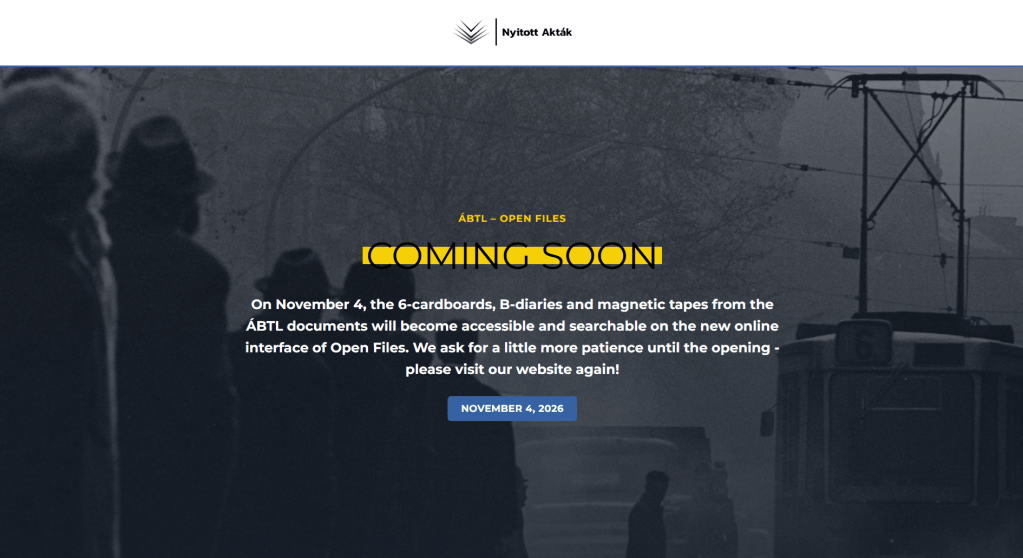
The Historical Archives of the Hungarian State Security Services are finalizing preparations to release thousands of agent files. Starting November 4, documents concerning individuals embedded within the socialist regime’s structure as secret informants will be freely searchable online. According to the archives’ historians, the new searchable database website is expected to spark a major public reaction.
“Only Slovakia and the Czech Republic managed to make their registry records public. Hungary’s current decision goes much further: first, far more detailed registration cards will appear online, and secondly, all existing recruitment files will be released. Nothing of this kind has been done anywhere else in the world,” Dr. Gergő Bendegúz Cseh, Director General of the archives, told Euronews.
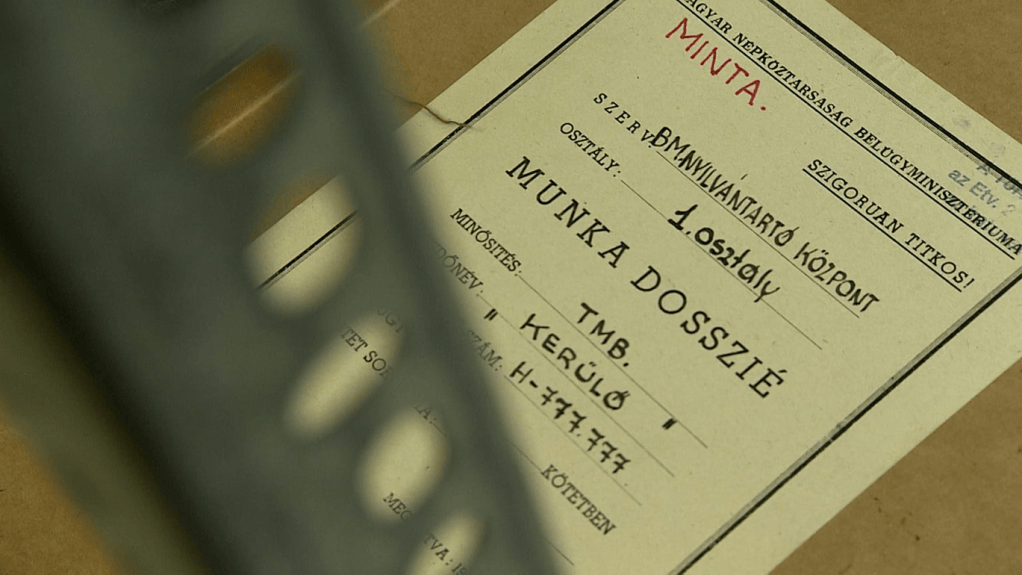
By publishing the agent files, Péter Magyar’s government is fulfilling one of its election promises. Under the relevant law, four types of documents will be included in the public database: the so-called “No. 6 cards,” the “H” dataset from magnetic tapes, “B” category logs, and “B” files.
The “No. 6 cards” were filled out during the recruitment of secret agents and contain their personal details as well as information regarding their recruitment. The magnetic tapes also primarily contain personal data, while the “B” logs list the recruited individuals; however, these logs have survived only for the period between 1957 and 1962.
The index cards (Category No. 6) contain very little information about specific agents. They offer no clarity on how exactly an individual was recruited, whether they attempted to resist, or if they voluntarily agreed to cooperate with the state security service. Nor do they reveal the specific nature of the reports filed — for instance, whether an agent might have sabotaged the agency’s work to protect acquaintances. Significantly more information can be gleaned from “File B,” the actual recruitment dossiers, but these more extensive materials will not be made public until 25 February 2027.
Data concerning 50,000 to 60,000 individuals will be released to the public. Researchers state that virtually every resident of Hungary is likely to find the names of relatives or acquaintances on these lists, and people should prepare themselves for potentially painful conversations. Archive specialists will be available to help interpret the documents and place them in their proper historical context.
“We aim to build active partnerships with schools. Whether we host student groups at the archive or visit educational institutions ourselves, we strive to engage young people using modern tools, —such as educational films originally produced by the state security agencies,” explained István Papp, head of the archive’s research department.
Historians advise anyone who discovers that an ancestor served in these secret agencies to request access to the full set of documents. Experts believe this will provide a comprehensive understanding of why and how these relatives cooperated with state security services prior to the regime change. The process is entirely free of charge and can be initiated online.

Translation © 2026 by Michael Estes and TranslatingHistory.org

